Land Clearing Services: A Landowner Guide
Explore land clearing services for rural acreage. Learn about forestry mulching, selective clearing, and what to expect from a professional contractor.
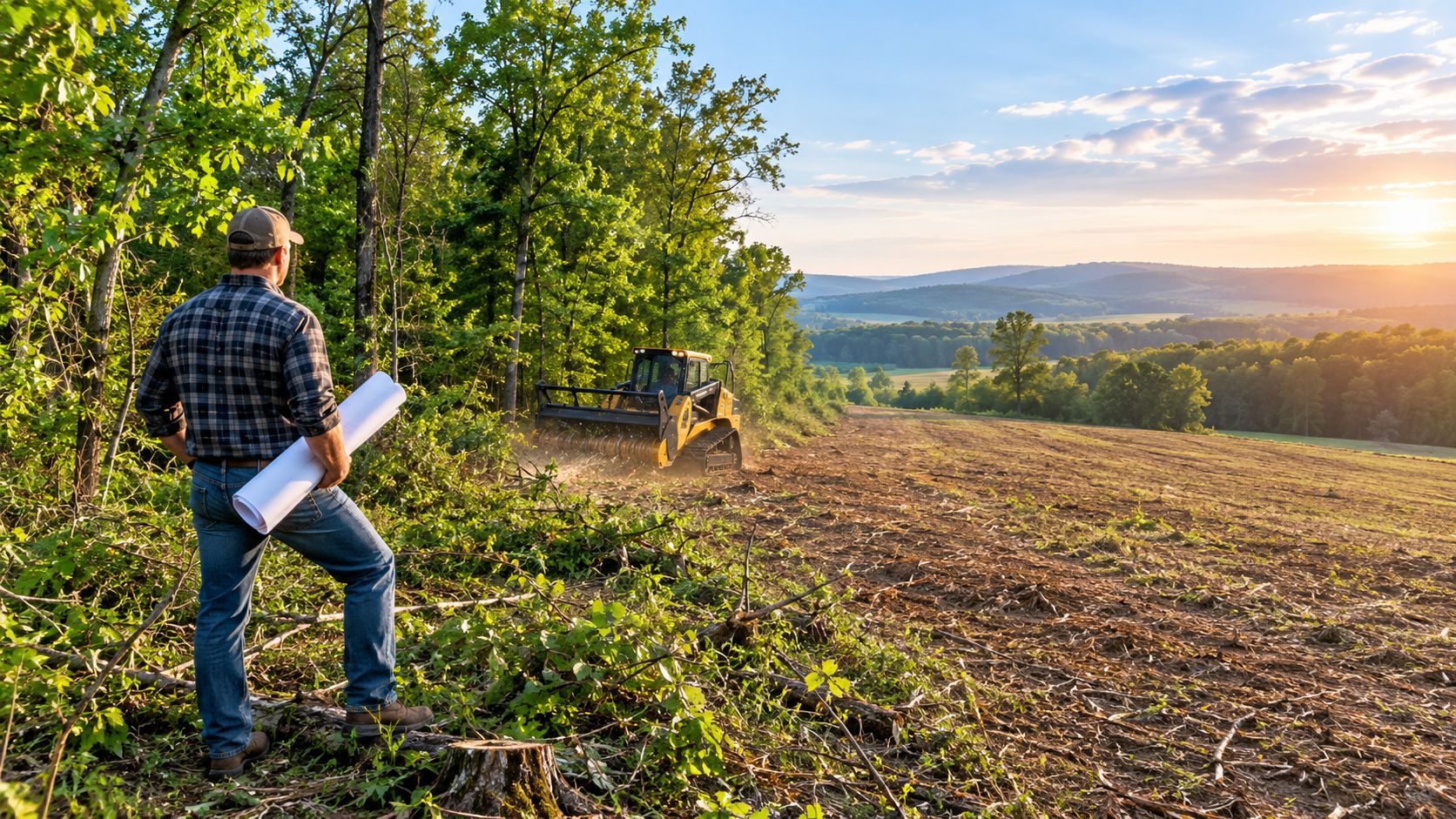
You've bought the acreage, walked the perimeter, and found yourself staring at a wall of cedar, yaupon, mesquite, and volunteer trees. The obvious answer seems to be clearing everything until the property looks clean. That approach can make land easier to see, but it can also remove shade, disturb drainage, expose soil, and erase the character that made the property worth buying.
Good land clearing services start with a different question: What should this land become, and what needs to stay for it to function well? A homesite, working pasture, recreational property, and hunting tract each require a different clearing plan. The right contractor helps you reclaim access and usability without treating every tree and brush line as disposable.
Table of Contents
- Rethinking How You Clear Overgrown Acreage
- Comparing Modern Land Clearing Methods
- The Professional Land Improvement Process
- Managing Erosion and Environmental Compliance
- Matching Services to Your Property Goals
- Choosing an Outcome-Focused Contractor
- Preparing Your Property for the First Phase
Rethinking How You Clear Overgrown Acreage
A new acreage owner often sees one problem, dense vegetation. An experienced land improvement contractor sees several decisions. A mature oak may be valuable shade beside a future home. A brushy drainage swale may be carrying water away from a road. A thick strip of native vegetation may provide privacy, wildlife cover, or protection from wind.
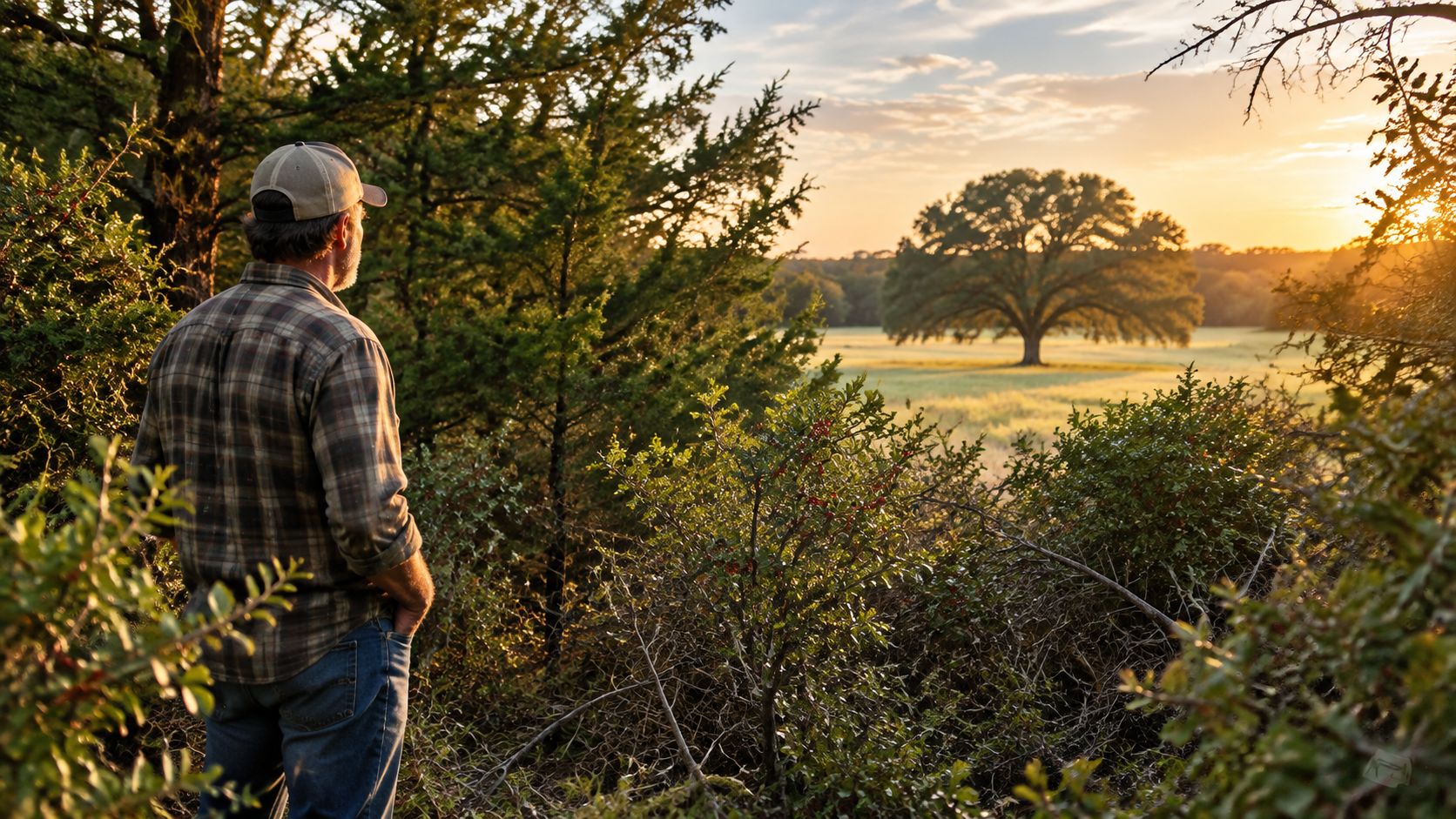
The owner who asks only for a “cleaned-up” property may get a result that photographs well for a short time but performs poorly during the next heavy rain or hot summer. Bare ground can become muddy, compacted, and difficult to reestablish. Removing every tree along an access route can leave equipment and livestock without shade. Clearing across a natural low point can redirect water toward a driveway, foundation, or neighboring property.
Practical rule: Decide what the land must do before deciding what the equipment should remove.
Start with use, not vegetation
For a homestead, the priority may be a defined building area, driveway, garden space, septic area, and room for future outbuildings. That doesn't mean the entire homesite needs to become an empty rectangle. Clearing a practical envelope around the future improvements while retaining desirable trees can create a more comfortable and resilient setting.
A ranch owner may need pasture reclamation, fence-line access, livestock routes, and equipment lanes. A recreational owner may value trails, overlooks, screening, and preserved woodland more than open acreage. The same cedar thicket can be an obstruction in one location and useful cover in another.
Separate keep zones from work zones
Before machinery arrives, identify mature trees, drainage features, steep areas, utility corridors, boundary lines, and vegetation you want preserved. Marking these areas gives the operator a visual reference and turns a vague request into a workable plan.
The scale of global forest loss also shows why vegetation management shouldn't be treated as a minor task. The UN Food and Agriculture Organization estimates that around 10 million hectares of forest are cut down globally each year, while roughly 489 million hectares have been lost to deforestation since 1990, according to the Northern Territory government's land-clearing information. Local acreage work is different from global deforestation, but the underlying activities, removing woody vegetation, opening access, and converting overgrown land into usable ground, appear across agriculture, ranching, infrastructure, and development.
The better outcome isn't the property with the least vegetation. It's the property where every remaining tree, open area, trail, and drainage feature supports the owner's actual plans.
Comparing Modern Land Clearing Methods
The clearing method determines more than how quickly brush disappears. It affects the soil surface, debris handling, future regrowth, access, and the appearance of the finished property. A forestry mulcher, excavator, skid steer with attachments, dozer, and hand crew each solve different problems.
| Clearing Method | Best Application | Soil Impact |
|---|---|---|
| Forestry mulching | Dense brush, cedar, yaupon, saplings, and selective opening | Usually leaves organic cover in place, with less hauling and less need for burn piles |
| Selective clearing | Homesites, wooded retreats, mature tree stands, and habitat-sensitive areas | Limits disturbance by removing targeted understory instead of stripping the whole site |
| Heavy brush clearing | Neglected pasture and acreage overtaken by substantial woody growth | Can disturb soil more, especially where repeated equipment travel or root removal is required |
| Fence-line clearing | New fence corridors and buried property boundaries | Creates a narrow working path, but requires care around posts, utilities, drainage, and neighboring land |
Forestry mulching
A forestry mulcher processes brush and small trees in place, leaving chipped or shredded organic material across the surface. This approach works well when the goal is to open visibility, reclaim access, or reduce woody density without hauling every limb away.
It isn't a universal answer. Large stumps, buried debris, rocky ground, steep terrain, or a future building pad may require excavation, root removal, grading, or another attachment. Mulch also needs to be spread appropriately. A heavy, uneven layer near a driveway or drainage route can create a different maintenance problem.
Selective clearing
Selective clearing protects the canopy and removes unwanted understory, invasive growth, or trees that interfere with a defined use area. It fits properties where shade, privacy, habitat, and visual character matter.
The operator needs a clear keep list. “Save the good trees” isn't specific enough when machinery is moving through dense growth. Mark trunks, flag boundaries, and identify trees by location or map whenever possible.
Heavy brush and fence-line clearing
Heavy brush clearing is appropriate when woody encroachment has consumed former pasture or blocked essential routes. The finished work may require follow-up mowing, seeding, root treatment, or recurring maintenance because opening the canopy can encourage new growth.
Fence-line clearing should remain narrow and purposeful. The goal is a corridor that allows installation, inspection, and repair, not a broad strip that sacrifices unnecessary vegetation. For additional practical context on choosing a method, review this guide to brush clearing approaches.
The Professional Land Improvement Process
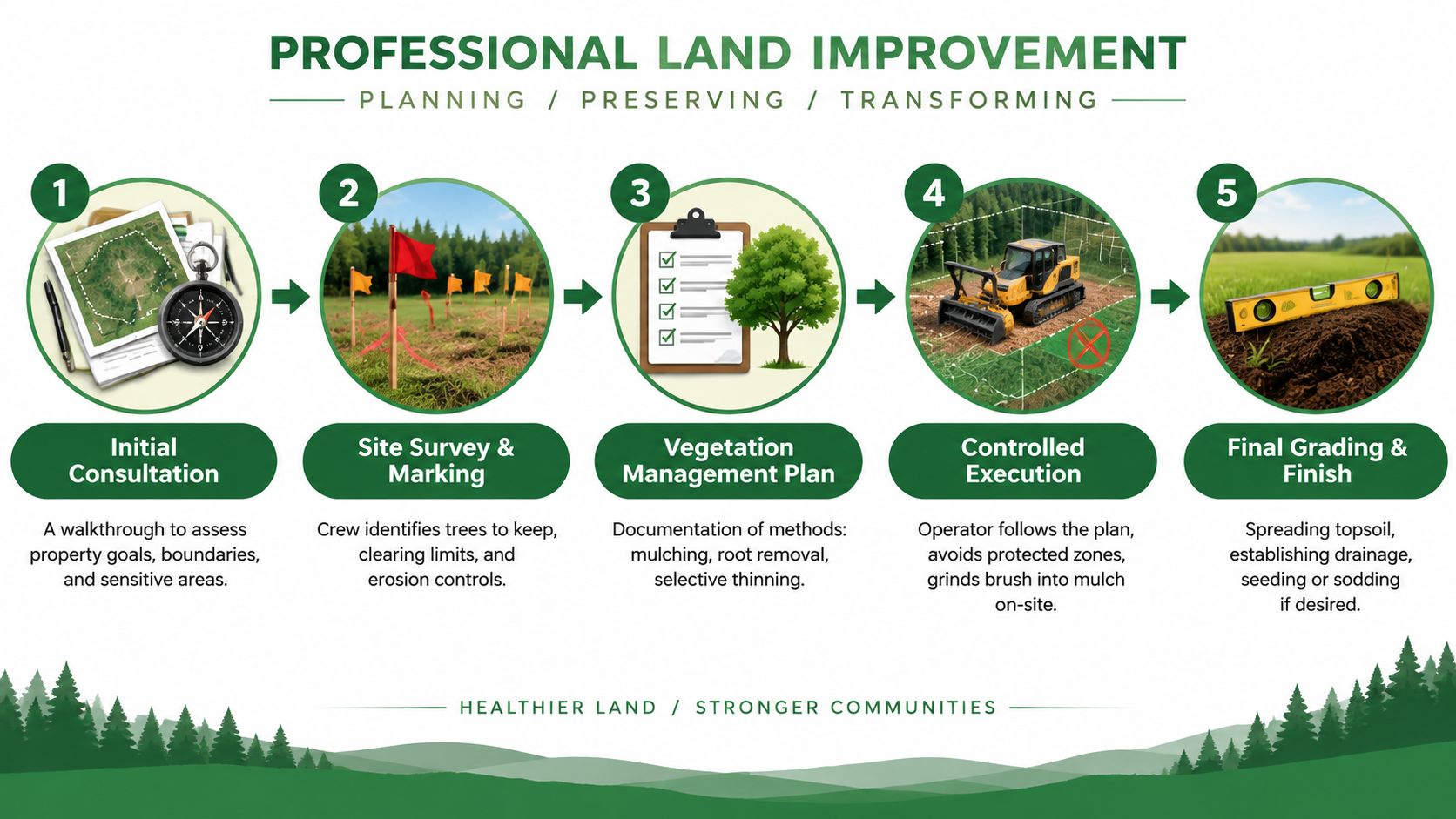
Professional land clearing shouldn't begin with an operator unloading a machine and asking where to start. The first phase should establish the desired result, site limits, hazards, and areas that must remain untouched.
Walk the property together
During the initial walkthrough, the contractor should inspect vegetation density, terrain, access points, soil conditions, drainage, existing improvements, and sensitive areas. The owner should explain how each part of the property is expected to function, whether that means a homesite, pasture, trail, fence route, or recreational area.
Bring a current survey if you have one. Point out wells, septic components, water lines, old structures, livestock areas, and trees with personal or practical value. A contractor can't protect features that haven't been identified.
Mark the scope before equipment moves
A written or mapped scope should distinguish between:
- Clearing limits: The exact areas scheduled for removal, mulching, excavation, or grading.
- Keep zones: Mature trees, drainage features, habitat areas, structures, and vegetation selected for preservation.
- Access routes: Equipment paths that avoid unnecessary travel over sensitive soil.
- Finish expectations: Mulched, rough-cleared, graded, seeded, or otherwise prepared surfaces.
- Cleanup responsibilities: The treatment of logs, stumps, piles, chips, and other material.
This level of detail prevents the most common disagreement in land work. The owner imagines a selective opening, while the operator interprets the job as broad removal. A marked plan gives both parties the same reference point.
Execute, inspect, and adjust
During execution, the operator should follow the agreed clearing limits and communicate when field conditions differ from the plan. Hidden rock, wet soil, unstable trees, buried material, or an unexpected drainage path can change the safest method.
The final walkthrough matters just as much as the initial consultation. Check access, tree protection, surface drainage, remaining debris, and whether the finished areas match their intended use. If the project includes grading, seeding, or additional restoration, define that work before the equipment leaves.
Managing Erosion and Environmental Compliance
Clearing exposes soil, and exposed soil responds quickly to rain, slope, and equipment traffic. Scraping a site bare may create a visually uniform surface, but it removes the protective cover that slows rainfall and limits sediment movement.
Heavy equipment can also compact travel lanes. Compaction changes how water moves through the surface, while repeated passes can create ruts and concentrated runoff. Research on mechanized firebreak construction found increased erosion on machinery tracks, and immediate woodchip mulching reduced soil loss from wildfire and construction by more than 70%, as reported in the PubMed study on mechanized disturbance and mulching.
Preserve cover where the site needs it
Forestry mulching can be a strong choice on sloped or rainfall-exposed ground because it leaves residue in place instead of removing all surface protection. One peer-reviewed study found that residue mulch reduced cumulative soil loss by 91% over five post-disturbance years compared with untreated slopes, according to the study on residue mulch and soil loss.
That doesn't mean mulch solves every erosion problem. The operator still needs to avoid unnecessary scraping, protect drainage outlets, manage concentrated flow, and keep equipment off wet ground when conditions make rutting likely. Forest-hydrology research has identified roughly 70% mulch cover as a practical threshold for effective post-disturbance protection, based on the same mechanized disturbance research. Treat that as a planning benchmark, not a guarantee for every soil type or slope.
Check legal exposure before clearing
Permitting risk rises when work affects waterways, protected vegetation, habitat, or land that hasn't been cleared for a long period. In the Northern Territory, government records show 7 permits covering 5,211 hectares of permitted clearing in 2024, with cumulative permitted clearing since 2003 reaching 233,277 hectares. The same record lists 10 permits for 10,632 hectares in 2023, illustrating how regulated clearing is mapped and recorded at the hectare level in that market, as documented by the Northern Territory land-clearing record.
Rules vary by location, but the general lesson applies broadly. Don't assume that land untouched for years is automatically exempt, and don't treat a creek, wet area, or drainage feature as ordinary brush. Recent Australian reforms removed some continuation-of-use exemptions for clearing that hadn't occurred in 15 years, and affected certain water-feature buffers within 50m in the Great Barrier Reef catchment, according to the National EPA explanation of land-clearing exemption reforms.
For any questionable area, pause the work and confirm requirements with the relevant local authority or environmental professional. A compliant plan is part of the project scope, not an administrative detail after the clearing is finished. For debris handling after removal, see this resource on brush-pile removal planning.
Matching Services to Your Property Goals
A landowner shouldn't order “clearing” as if it were a single product. The correct combination of services depends on the outcome you need, the areas you want preserved, and the maintenance you can handle afterward.
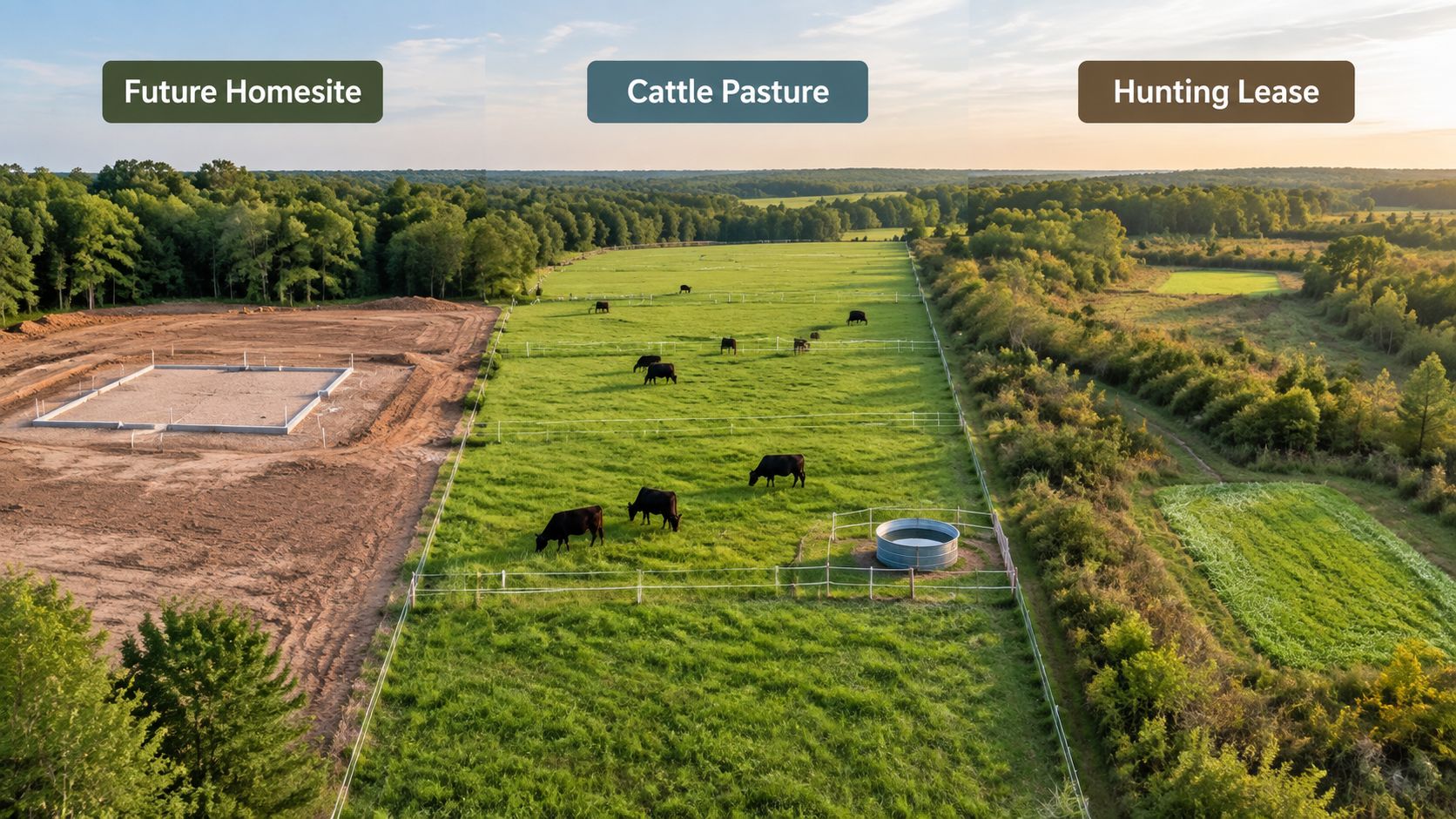
Building a homestead
A future homesite usually needs a defined building area, construction access, utility routes, drainage planning, and room for associated structures. Clearing the entire surrounding tract can be wasteful and may remove shade or screening that would improve the finished property.
A better plan may combine selective clearing around the homesite with targeted excavation or grading where construction requires it. A separate trail or service route can connect the house area to barns, gardens, water infrastructure, or pasture without opening every wooded section.
Reclaiming pasture
Former pasture overtaken by cedar, mesquite, yaupon, or volunteer trees often needs heavier brush clearing, followed by a maintenance plan. Mulching can reduce the need to haul material, while root removal or grading may be necessary where woody growth has created rough ground or blocked equipment access.
The contractor should distinguish between productive open ground and areas that provide useful shelter, shade, or drainage protection. Removing all woody vegetation may produce a broad opening, but it can also create more long-term maintenance than a targeted reclamation plan.
Improving access and boundaries
A trail system should connect actual destinations, not just cut the straightest line through the property. Routes for trucks, ATVs, tractors, livestock, and foot traffic each have different practical requirements. Drainage crossings, turning areas, grades, and maintenance access should be considered before the first pass.
Fence-line clearing has a similarly narrow purpose. Open enough corridor for layout, installation, inspection, and repair, then leave adjacent vegetation that doesn't interfere. This preserves privacy and reduces unnecessary disturbance along the boundary.
Preparing for sale
Pre-sale improvement should focus on what buyers can understand during a visit. Open the approach, reveal usable acreage, restore access to important areas, and remove vegetation that hides fences, structures, or building opportunities.
A strategic cleanup often communicates more than a broad scrape. Buyers can see the property's possibilities while still recognizing its mature trees and natural features.
Choosing an Outcome-Focused Contractor
An equipment operator can remove vegetation. An outcome-focused contractor plans what the property should look like, how it should function, and what maintenance the owner will face afterward. That distinction matters because hourly machine work can encourage unnecessary passes, unclear boundaries, and decisions made for equipment convenience rather than land performance.
Questions to ask before hiring
Ask how the contractor will handle:
- Preservation: Which trees, drainage features, habitat areas, and structures will be marked as keep zones?
- Method selection: Why is forestry mulching, excavation, dozing, hand removal, or selective thinning appropriate for each area?
- Surface protection: How will the crew limit rutting, compaction, bare soil, and concentrated runoff?
- Scope control: What exactly is included, and how will changes be approved if site conditions differ?
- Finishing: Will the area be rough-cleared, mulched, graded, seeded, or left ready for a separate phase?
Local familiarity helps, but it shouldn't replace a clear plan. A contractor working around San Antonio and South-Central Texas should understand that Hill Country terrain, rocky ground, dense brush, rural access, drainage, and small-acreage logistics can change how the job is approached.
Compare the result, not just the rate
A low hourly rate doesn't tell you whether the finished acreage will be usable. Compare the proposed equipment, clearing limits, protection measures, debris handling, finish condition, and communication process.
Fieldmark Land Co. provides property walkthroughs, selective clearing, forestry mulching, brush removal, pasture reclamation, trail and access work, fence-line clearing, homesite preparation, and ongoing land management for rural properties around San Antonio. Use this guide to finding land clearing near you to prepare better questions before requesting a site visit.
Preparing Your Property for the First Phase
The project starts before the first machine arrives. A few hours spent confirming boundaries, hazards, access, and priorities can prevent damaged infrastructure, neighbor disputes, and avoidable changes to the work plan.
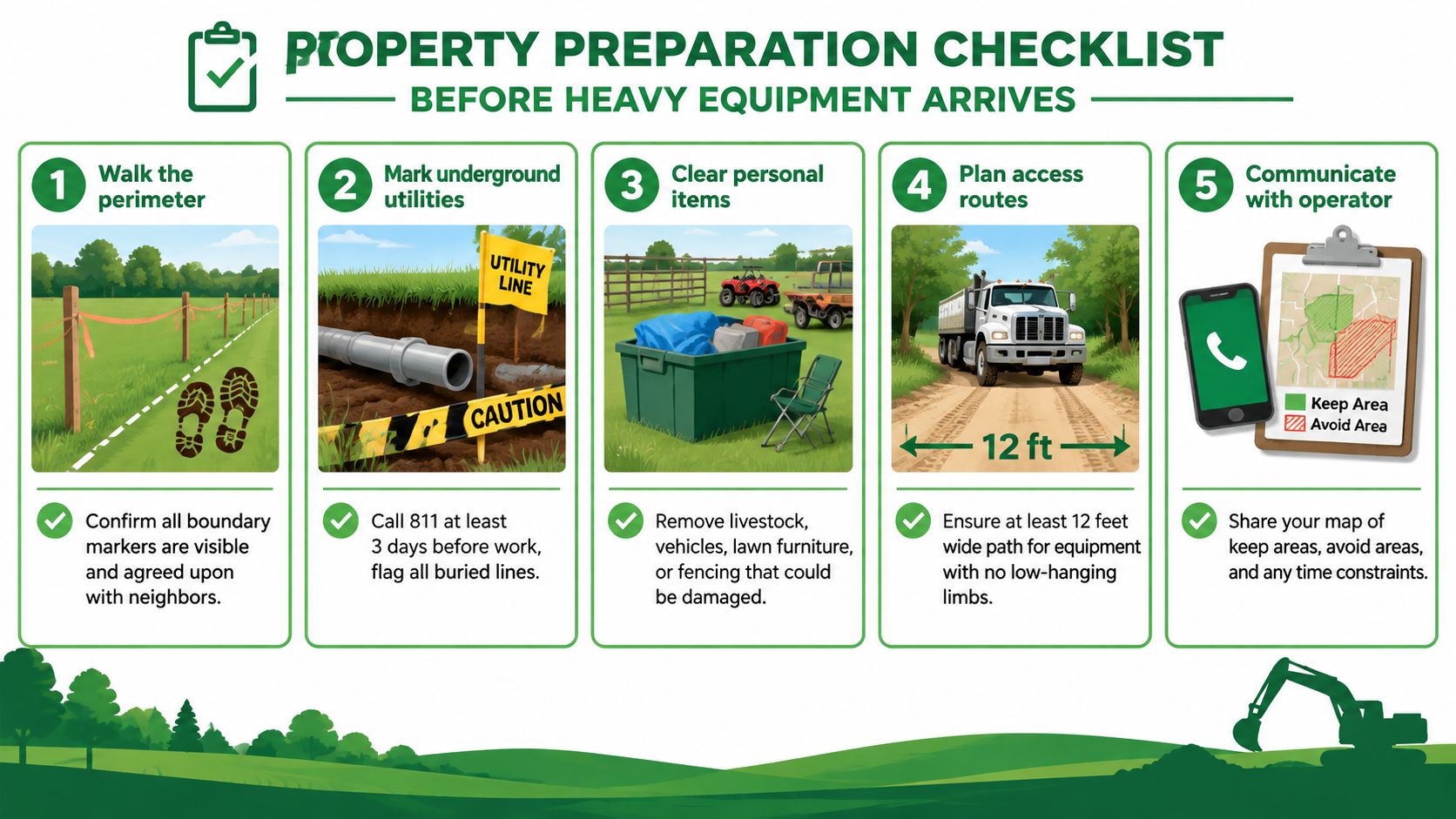
Complete the site checklist
Walk the perimeter. Confirm visible boundary markers and discuss uncertain lines with adjacent owners before clearing begins. A vegetation-covered fence isn't proof of the legal property line.
Locate buried hazards. Identify wells, septic fields, water lines, old foundations, tanks, and buried utilities. Contact the appropriate locating service before excavation or heavy equipment work, and give the contractor a map of anything uncertain.
Remove personal property. Move vehicles, trailers, livestock, lawn furniture, temporary fencing, equipment, and other items that could obstruct access or suffer damage.
Plan equipment access. Walk the intended entry route and check gates, bridge crossings, turning areas, low branches, soft ground, and overhead conflicts. Don't assume a route that works for a pickup will work for a mulcher or excavator.
Create a communication map. Mark clearing limits, keep zones, avoid zones, access routes, water features, structures, and areas that may be handled in a later phase.
Divide a large reclamation into useful phases
You don't have to clear the entire property at once. Start with the area that enables the next decision, such as the driveway approach, homesite, primary fence corridor, livestock access, or a route to the back acreage.
A phased plan also lets you observe how the land responds. After the first area is opened, you can evaluate drainage, regrowth, shade, traffic patterns, and maintenance needs before expanding the work. That is often more practical than committing to broad clearing without seeing the finished surface.
Give the operator written priorities and agree on how field changes will be handled. If a marked tree turns out to be hazardous, or wet conditions make a planned route unsafe, the crew should know who can approve an adjustment and how that change will be documented.
The best first phase creates a clear improvement while protecting the options that come next. It opens the property without forcing you to decide the future of every acre on the same day.
Fieldmark Land Co. helps rural property owners around San Antonio and South-Central Texas plan and complete selective clearing, forestry mulching, brush removal, pasture reclamation, trails, fence lines, and homesite preparation. Visit Fieldmark Land Co. to request a property walkthrough and turn an overgrown acreage problem into a practical, phased land improvement plan.