Pasture Reclamation Guide for Neglected Acreage
Pasture reclamation explained for rural landowners. Learn how to assess, clear, and restore grazing land with practical methods and timing guidance.
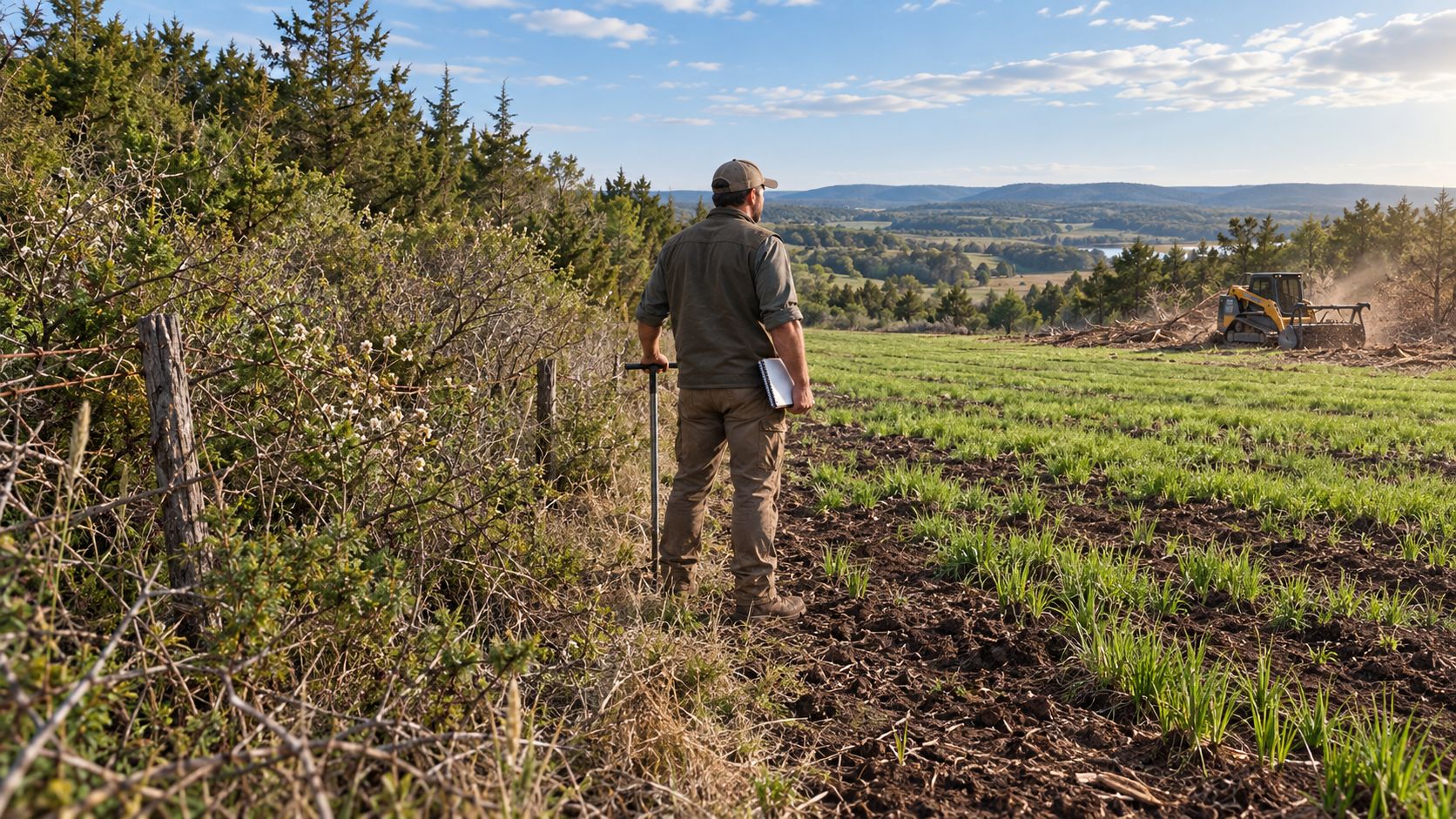
You bought the place because it had good bones, maybe a fence line, maybe a tank, maybe just enough grass to prove it used to carry cattle. Then you walk it and find cedars shoulder-high, plum thickets, briars, and old gate areas packed so tight your boots barely leave a print. That's the moment you realize this isn't a mowing job. It's a pasture reclamation project, and the key question is what you want the acreage to become after the brush is gone.
Table of Contents
- What Pasture Reclamation Actually Means
- Reading the Land Before You Touch It
- Mechanical Methods for Removing Brush and Regrowth
- Biological Steps That Bring Grass Back
- Timing the Work Around Weather and Growth Cycles
- What Drives the Cost Per Acre
- Putting It Together Into a Reclamation Plan
What Pasture Reclamation Actually Means
The first mistake is treating overgrown pasture like a cleanup problem. A contractor can knock back brush fast enough, but if the landowner hasn't decided whether the property is headed toward rotational grazing, hay production, wildlife cover, or easier access, the work usually stops halfway in purpose even if the machines keep moving. The clearing phase matters, but it's only one part of the land-use decision.
That's why I explain pasture reclamation as a multi-year reset, not a one-day service. A property that once carried grass can drift into shrub-dominated ground after abandonment, and a major review of pasture and rangeland restoration notes that land managers commonly reverse that shift with burning or clear-cutting when shrub invasion takes over CIHEAM review. The same review also shows that planned reclamation can be scaled, but not every site gets the full treatment exactly as designed.
Practical rule: don't hire the cheapest clearing bid unless it includes what happens after the brush is down.
That's where acreage owners get burned. A clean scrape can leave you with exposed soil, a poor seedbed, and a bill for fixing erosion later. A more deliberate reclamation job keeps one eye on soil recovery, one eye on what species need to come back, and one eye on how livestock will return without undoing the progress.
If you're comparing service types, the difference between reclamation and simple clearing is the difference between a job and a plan. If you want to see how that broader scope usually gets scoped on the ground, the overview of land clearing services is a useful starting point.
Reading the Land Before You Touch It
Before anyone brings equipment through the gate, walk the property like you're inventorying a job site, not admiring it. I want to know where grass is still hanging on, where brush has taken over, where the soil is bare, and where old use patterns still show up. That first pass tells you whether the property needs light brush control or a full rebuild.
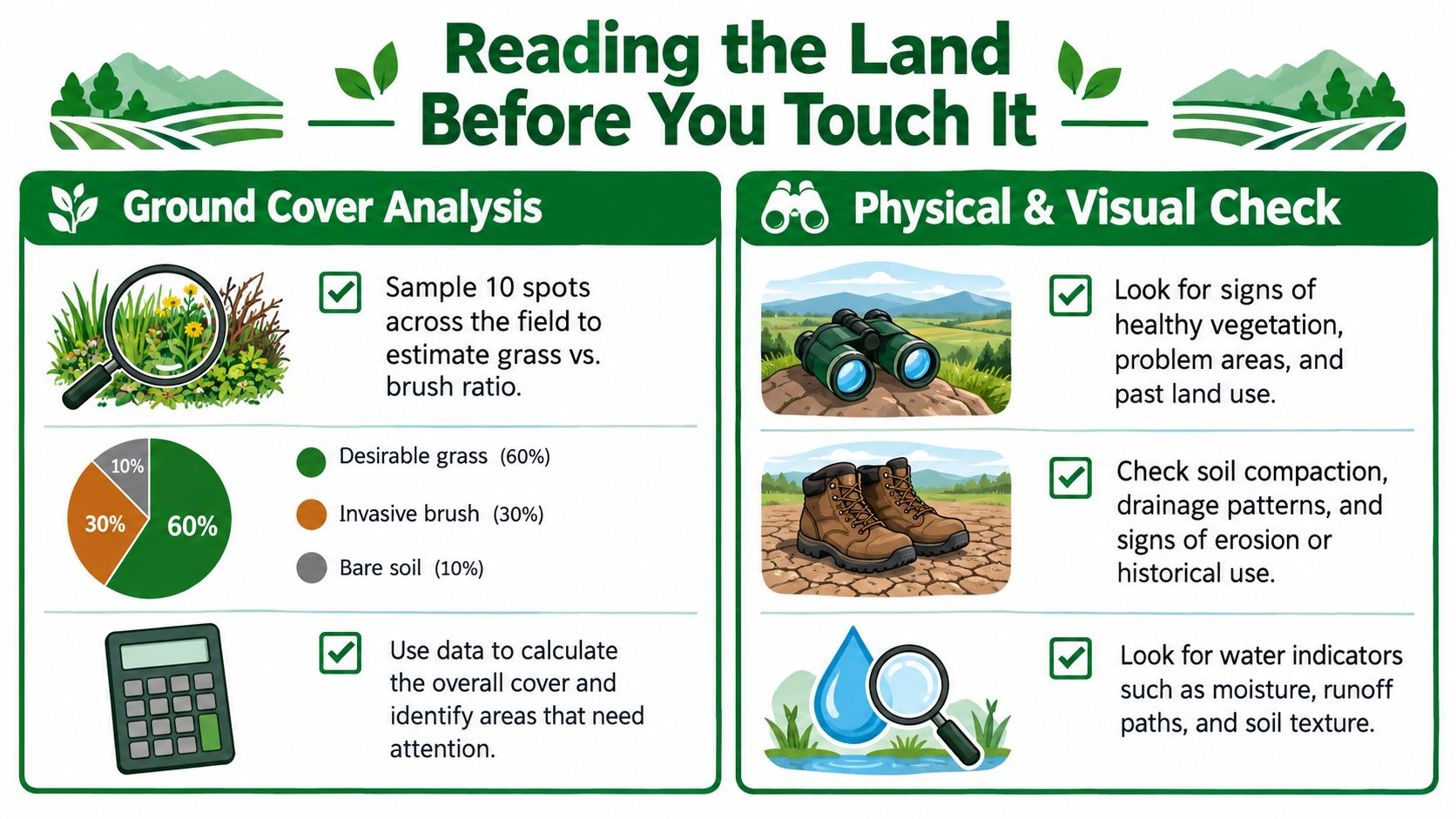
Start with ground cover, not wishful thinking
Look at the mix underfoot. If desirable grass still shows up in strips, patches, or along fence lines, that changes the project. If the property is mostly woody regrowth, invasive brush, or bare soil, then the land needs a staged recovery, not just a quick pass with a cutter.
A simple way to do this is to walk in a rough grid and take phone photos at regular stops. Mark the places where grass survives, where brush thickens, and where you're seeing the same species over and over. That sketch becomes the contractor conversation, and it keeps the discussion grounded in facts instead of guesses.
Then read the ground itself
Soil tells on a neglected pasture. Gullies, exposed subsoil, and hard-packed areas near old gates usually mean water and traffic have already changed the site. Under brush canopies, you may see organic matter building up in a way that looks healthy at first glance but doesn't necessarily mean the pasture is recoverable without work underneath.
Check for stumps, root balls, rocks, and old fence wire before anyone quotes equipment. Those hidden obstacles affect machine choice, travel time, and whether a property can be mulched cleanly or needs heavier mechanical removal. Also notice slope direction and standing water patterns, because the same clearing method can be harmless on a flat bench and destructive on a drainage line.
Walk the perimeter first, then cut the interior into mental squares. It's the quickest way to spot where access, drainage, and regrowth are going to fight you.
Mechanical Methods for Removing Brush and Regrowth
Mechanical clearing is where most pasture reclamation starts, but the method should follow the land, not the other way around. A cedar-choked hillside, a small mixed-acreage parcel, and a flat field with scattered regrowth all call for different tools. The wrong match can leave the property rougher, wetter, or harder to seed than before.
A contractor who works reclamation well usually thinks in terms of disturbance. Some jobs need minimal soil disruption because the topsoil is already thin. Others need aggressive removal because roots, stumps, and debris are blocking the next phase of recovery.
| Mechanical Clearing Methods Compared | Best For | Leaves Behind | Watch Out For |
|---|---|---|---|
| Forestry mulching | Dense brush, cedar, saplings, and regrowth on ground that should stay relatively intact | A mulch layer and intact topsoil in many cases | Not suited for very large trees, buried obstacles, or ground littered with rock |
| Bulldozing | Heavy brush, stump removal, and sites where total reshaping is part of the plan | Windrows, exposed soil, and a rougher seedbed | Higher erosion risk on slopes and more disturbance to the surface |
| Skid-steer work | Smaller acreages, mixed debris, fence-line recovery, and tighter access | A more managed finish than a dozer pass, depending on attachment | Slower on large acres, and hidden stumps or wire can complicate the work |
Forestry mulching is often the practical fit for pasture reclamation because it processes vegetation in place and leaves organic material on the ground. That can help protect the surface while opening the land back up, which matters if the next move is seeding or controlled grazing. The trade-off is simple, though. Mulching handles brush well, but it doesn't remove every root system, and it's not the right answer for oversized trees or rough, debris-heavy ground.
Bulldozing has its place, but it's a heavier-handed move. If the goal is complete stump removal or regrading, it can make sense. If the goal is to recover pasture function, it can leave more repair work behind than owners expect.
For a look at how a mulching-centered approach gets applied in the field, the forestry mulching service shows the kind of in-place clearing that often fits reclamation work.
Practical rule: if the ground can be saved, save it. Reclamation fails faster when the contractor turns topsoil into a cleanup problem.
Biological Steps That Bring Grass Back
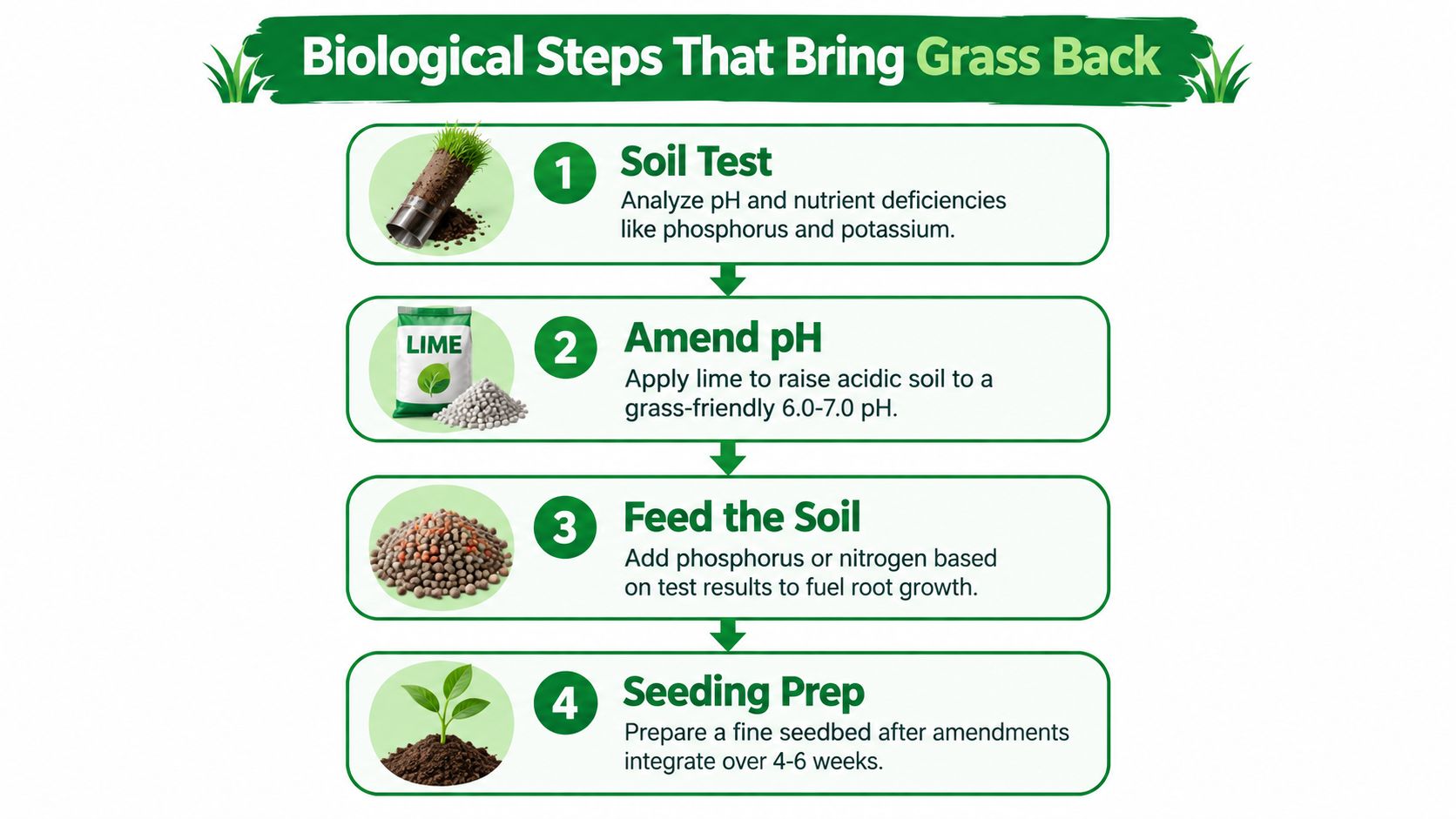
Brush removal exposes the core job. Grass doesn't return just because light reaches the soil again. The land still has to be biologically rebuilt, and that starts with testing, amendments, and seed that match the site.
The first move is a soil test. If pH is off or nutrients are missing, seeding into that problem usually gives you a thin stand and a lot of regret. The next move is choosing species that fit the climate, soil texture, and intended use. A hay field and a grazed pasture don't need the same mix, and a cool, wetter site doesn't recover the same way as a hot, dry one.
Seed has to meet soil, not just air
Broadcasting seed over rough, undisturbed ground looks easy and fails often. Drilling or cultipacking gives better seed-to-soil contact, and that matters more than the brand on the bag. If the seed can't touch moist soil consistently, you're paying for a hopeful scatter rather than a stand.
Product choices should be tied to the end use. Some owners want a grazeable sward that can handle repeated pressure. Others want a mixture that doubles as hay and grazing ground. The right mix matters more than a pretty field in the first month.
Grazing has to come back slowly
One of the common mistakes on reclaimed acreage is putting animals back too soon. New stands need time to root and build resilience before traffic and bite pressure resume. If you want the pasture to hold, you have to treat the first season like establishment, not production.
The property-maintenance side of that work matters too, especially when regrowth and weeds start testing the new stand. A structured follow-up plan is a lot easier to keep on track when the landowner already has a maintenance partner, which is why some owners look at a property maintenance service as part of the recovery plan rather than a separate chore.
A reclaimed pasture that gets grazed like a finished pasture usually slips backward fast.
Timing the Work Around Weather and Growth Cycles
The same field can be easy or miserable depending on when you touch it. Brush clearing is much simpler when the ground is firm enough to carry equipment and the vegetation is actively growing. In most places, that means waiting for a window when the brush is still alive, but the soil isn't soft enough to rut under heavy tires.
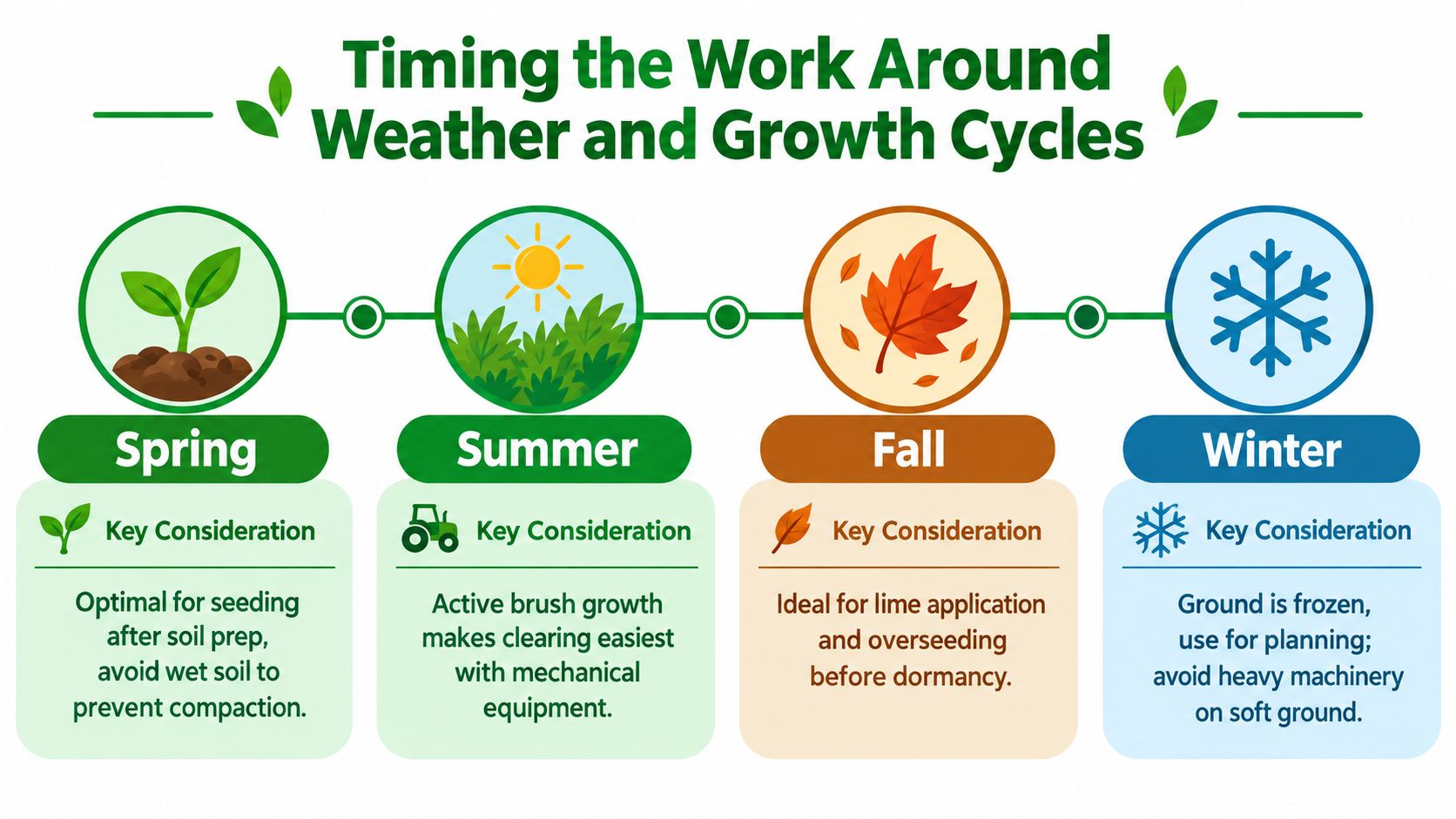
Clearing and seeding depend on different seasons
Mechanical clearing and biological establishment don't always happen at the same time. Brush removal often fits best when the vegetation is active and the ground can support the equipment. Seeding works best when moisture and temperature support germination, which can mean a different window entirely depending on the region.
That's why a reclamation project has to be sequenced. Clear before dormancy if the brush is getting ahead of the pasture. Amend the soil before seed goes in. Seed before the next reliable moisture window. Then keep livestock out long enough for roots and crowns to hold.
Weather changes the cost of mistakes
Wet soil is expensive to repair. If a dozer, skid steer, or heavy mulcher gets stuck in soft ground, the fix can leave tracks, compaction, and drainage issues that are harder to correct than the brush was in the first place. Dry, firm ground gives you more control, but waiting too long can mean you miss the seeding window.
Good timing saves more money than cheap clearing ever will.
Winter can be a planning season, especially on properties where the owner wants to line up seed, equipment, and contractor scheduling before the busy months start. Spring can work for seeding in the right climate, but wet ground and a hot summer ahead can punish a rushed stand. Fall often gives more breathing room for soil prep and overseeding before dormancy.
What Drives the Cost Per Acre
People want a simple price per acre, but pasture reclamation doesn't work that way. Cost changes with brush density, access, slope, debris, soil condition, and what the owner wants the land to become. Two fields that look similar from the driveway can have very different bids once the contractor walks them.
The biggest price driver is usually density. Sparse pasture with scattered saplings is not the same job as a mature brush field with tangled woody regrowth. Terrain comes next. Flat, open ground lets equipment move efficiently, while steep or broken ground slows the work and increases safety margins.
A smaller acreage can also cost more per acre than a larger one because mobilization gets spread across fewer acres. If the site is far from the contractor's yard, or if gates, fences, and tight access force slower movement, the economics change quickly. Soil work adds another layer. If the project needs amendment spreading, deeper tillage, or specialty seeding equipment, the bid should reflect that.
| Cost Ranges Per Acre | Density and Condition | Typical Price Per Acre | What's Included |
|---|---|---|---|
| Light reclamation | Scattered brush, workable access, minimal debris | Varies by site | Clearing, light cleanup, and basic finish work |
| Moderate reclamation | Mixed regrowth, some slope, uneven access | Varies by site | Brush removal, debris handling, and more careful equipment movement |
| Heavy reclamation | Dense woody encroachment, stumps, rough terrain, or poor access | Varies by site | More intensive clearing, slower production, and added handling of obstacles |
The important part is to ask what's behind the price. A lower number that leaves the land rough, unseedable, or prone to erosion can be the more expensive choice in the long run. A tighter scope that respects the soil and the end use usually saves money downstream.
I'd rather see a landowner pay for the right sequence once than pay for brush removal, then pay again to fix a poor seedbed, then pay again when the stand fails. That's not efficiency. That's three jobs pretending to be one.
Putting It Together Into a Reclamation Plan
Start with the destination, not the machinery. A pasture meant for light grazing doesn't need the same finish as land that will carry hay, wildlife cover, or future fencing and access improvements. Once the target use is clear, the rest of the project becomes a sequence instead of a guess.
The practical order is straightforward. Read the land first. Clear it next. Restore the soil and seed the surface after that. Then bring grazing back only when the stand can handle pressure without getting reset.
The 2025 Nature study on U.S. grazing lands estimates 25–60 teragrams of carbon per year from soil restoration efforts and 13–70 teragrams of carbon per year from management improvements, which shows why reclamation matters beyond appearance and forage Nature study. It also notes that 70 TgC is equivalent to the annual greenhouse-gas emissions from the energy use of about 9 million U.S. homes Nature study. That doesn't mean every pasture project becomes a climate project in the same way, but it does show that grassland recovery sits in the same conversation as production, soil function, and resilience.
The best reclamation plans are the ones that survive year two, not the ones that look finished on day one.
A good contractor conversation should be about goals, constraints, and timing trade-offs. The work should be phased, with checkpoints that tell you whether the property is moving toward function or just looking cleaner. If you overclear in year one, seed before the surface is ready, or reintroduce livestock before roots are established, you're not finishing early. You're creating another repair cycle.
Fieldmark Land Co. handles pasture reclamation, selective clearing, brush removal, access work, and ongoing maintenance for rural acreage around San Antonio and the Hill Country. If your property needs a practical first phase and you want the work shaped around what the land should become, visit Fieldmark Land Co. and start with a property walkthrough that matches the plan to the ground.