Brush Removal Prices: 2026 Cost Guide
Understand brush removal prices, cost factors, and clearing methods. Learn how contractors quote acreage and get accurate estimates for your rural property.
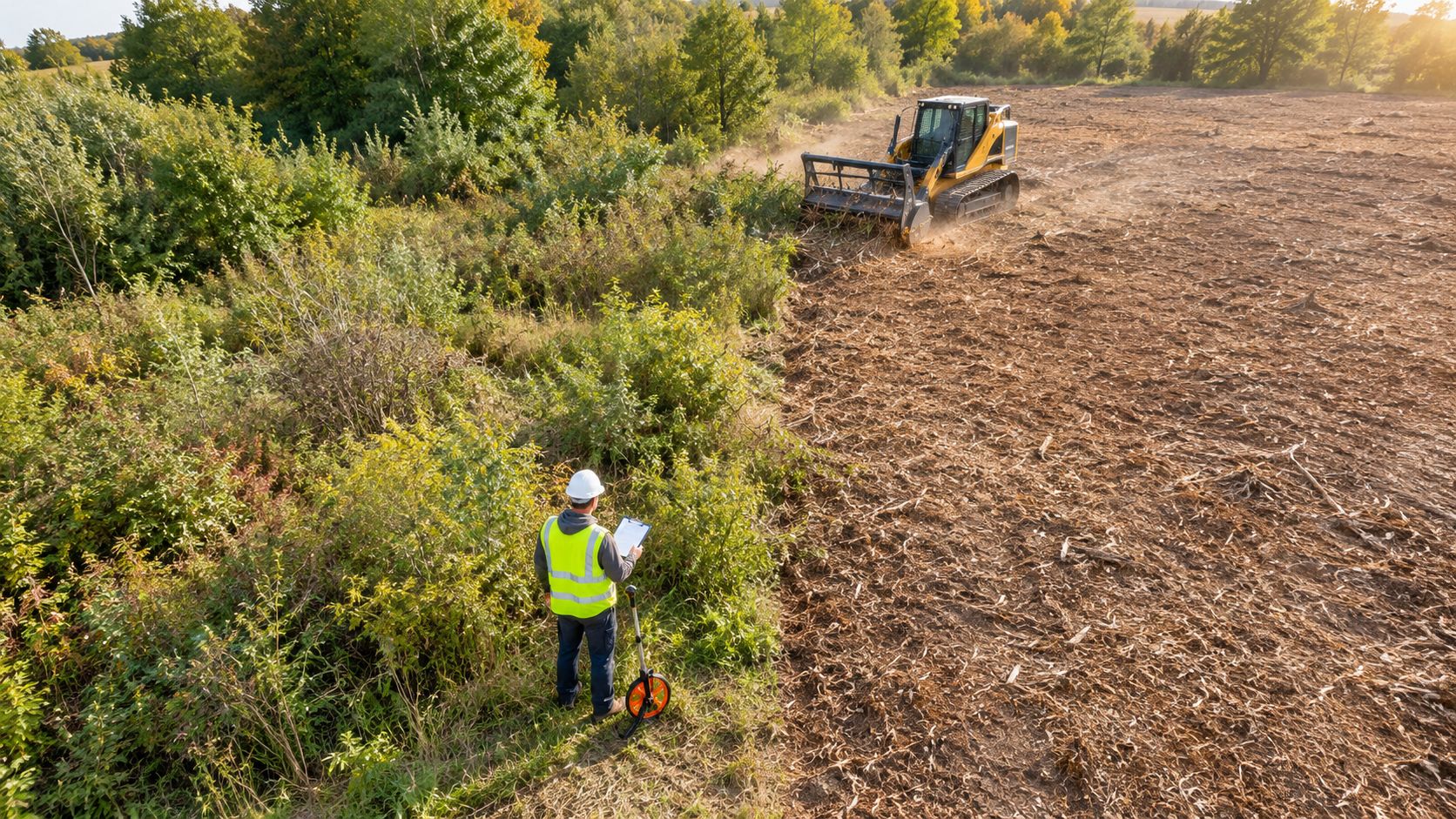
Brush removal prices typically range from $800 to $3,000 per acre for standard clearing, but can swing from $150 per truckload for simple haul-away to over $5,000 per acre for dense, hard-to-access wooded sites. The number on your quote depends less on acreage than on what must be cut, how equipment reaches it, and where the debris goes.
You may be standing at the edge of a property that looked manageable from the road, only to find cedar, yaupon, mesquite, saplings, old fence lines, and deadfall packed behind the first row of trees. One contractor may quote a low per-acre figure, while another gives you a price several times higher. Both may be reasonable if they're pricing different work.
The practical question isn't just, "What does brush removal cost per acre?" It's, "What finished result am I buying?" Clearing a few existing piles, reclaiming an overgrown homesite, opening a fence corridor, and processing dense woody growth across rural acreage are separate jobs. Treating them as one category creates bad comparisons and unpleasant change orders.
Table of Contents
- Understanding Brush Removal Pricing
- How Contractors Calculate Your Quote
- Site Factors That Drive Costs Up or Down
- Comparing Clearing Methods and Debris Handling
- Getting an Accurate Estimate for Your Acreage
- Smart Strategies to Save Money on Clearing
- Evaluating Proposals and Planning Next Steps
Understanding Brush Removal Pricing
A property can look clear from the road and still contain cedar, yaupon, mesquite, saplings, deadfall, and old fence lines behind the first row of trees. That difference explains why two contractors may quote very different amounts for the same acreage. They may be pricing different finished results.
Published guidance covers a wide spread. Light brush removal is listed around $20 to $200 per acre in HomeAdvisor's land-clearing guidance. Practical brush removal on overgrown rural properties is placed around $800 to $3,000 per acre in HomeGuide's brush-pile removal cost guide. A separate 2026 market summary puts lighter-vegetation projects around $330 to $630 per acre (Angi's forestry mulching cost guide).
These ranges describe different scopes, not a reliable national price tag. Open ground with light undergrowth may require limited machine time. Dense woody regrowth can call for a forestry mulcher, tracked skid steer, chainsaw work, hand cleanup, stump treatment, and careful travel around desirable trees. Loading, hauling, and disposal add another layer of labor when the material cannot be processed on-site.
The practical question guides how you compare quotes: what finished result am I buying? Clearing an existing pile, reclaiming an overgrown homesite, opening a fence corridor, and processing dense growth across rural acreage are separate jobs.
Scope categories for brush removal pricing
Use these categories as planning references, not promises:
- Simple pile haul-away: Existing, cut-and-stacked brush may cost around $150 to $200 per pickup-truck load, according to Dropcurb. That covers debris transport, not land reclamation.
- Light brush clearing: Open areas with limited woody growth may fit the lower published per-acre ranges when access is straightforward.
- Standard rural clearing: Overgrown acreage with brush and small trees commonly falls near $800 to $3,000 per acre, as noted earlier.
- Dense or wooded clearing: Difficult sites can reach $5,000 or more per acre when canopy complexity, poor access, and added handling increase machine time.
- Heavier land clearing: A 2026 guide places heavier scenarios around $3,400 to $6,700 per acre or more, as noted earlier.
Practical rule: A quote should state whether it includes cutting, mulching, stump work, hauling, grading, and final cleanup before you compare it with another proposal.
Start your budget with a written scope. Identify what stays, what goes, the required cutting height, whether roots and stumps remain, and whether the ground must support fencing, livestock, construction, recreation, or routine maintenance. Clear scope produces a more useful price than any per-acre average.
How Contractors Calculate Your Quote
Contractors generally choose a pricing model based on the shape of the work. A large, uniform tract is easier to measure by acreage. A small property with hidden fences, structures, steep ground, or scattered piles may be more predictable by time. Existing debris piles are often priced by load because the cutting has already been done.
Per-acre pricing
Per-acre pricing works best when vegetation density is reasonably consistent and the contractor can move equipment efficiently. It gives the landowner a clearer project total and rewards a contractor who has the right machine for the terrain. Published 2026 guidance places brush-focused forestry mulching around $1,000 to $1,800 per acre for undergrowth and small trees, while heavier conditions can rise substantially (Angi).
The risk is uneven ground. If one portion of the tract is open and another is tangled with mature woody growth, a single average may hide the difficult area. Ask whether the contractor measured the entire parcel or priced from a satellite view.
Hourly pricing
Hourly work is common for small, irregular, or exploratory jobs. A recent forestry mulching guide reports hourly rates around $150 to $300, with total projects commonly ranging from $1,000 to $4,000 (Angi). This model can be fair when the work contains unknowns, but it transfers more schedule risk to the owner.
Request an explanation of the equipment included in the hourly rate. A tracked skid steer with a forestry mulcher doesn't produce the same output as hand labor with brush cutters. Clarify whether mobilization, fuel, hand cleanup, and disposal are separate.
Per-load pricing
Per-load pricing suits brush that's already cut and staged near a driveway or road. The Dropcurb brush-removal summary places pickup-truck-load haul-away around $150 to $200 per load. This can be economical for cleanup-only work, but it doesn't cover cutting, dragging, stump treatment, or inaccessible piles.

For larger rural projects, compare proposals using the same measurement. A useful land-clearing service overview can help you distinguish acreage clearing from site preparation and related improvement work. The cheapest model isn't automatically the cheapest project. It depends on who carries the uncertainty and what the final invoice includes.
Site Factors That Drive Costs Up or Down
Two properties with the same acreage can require completely different equipment strategies. One may have open grass with scattered shrubs. Another may contain dense cedar, mesquite, volunteer trees, ravines, wet soil, and an old fence hidden under the growth. Machine productivity changes with every one of those conditions.
Vegetation density and structure
Light grass and low undergrowth usually require less cutting and handling than woody stems, saplings, and interlocked brush. Dense vegetation slows the machine because the operator must work more deliberately, make additional passes, avoid desirable trees, and manage material that doesn't process cleanly.
A property with mature trees mixed through the understory often costs more than an equally dense thicket in an open field. Selective work demands judgment. The operator must preserve keep-trees, avoid damaging trunks, and maintain enough clearance for the owner's intended use.
Stumps change the scope again. A mulcher can process some above-ground growth while leaving root systems in place. If you need a construction-ready area, the contractor may need separate excavation, grinding, or removal work. Don't assume “cleared” means “ready for a foundation.”
Terrain, soil, and working room
Slopes reduce safe operating speed and can limit which machines can work effectively. Rocks, uneven ground, drainage channels, and soft soil also increase maneuvering time. A machine that can travel directly across dry, open ground may need a longer route or careful tracking on a wet or unstable site.
Access is one of the most underestimated factors. The contractor needs to get a trailer, skid steer, excavator, truck, or mulcher to the work area. Narrow gates, low branches, steep approaches, creek crossings, and weak driveways can turn a straightforward mobilization into a separate challenge.
Before requesting a quote, walk the route a machine would take from the road to the work area. A clear property boundary doesn't guarantee usable equipment access.
Sensitive areas add planning requirements. Drainages, ponds, wet ground, mature shade trees, utility corridors, and neighboring improvements may need exclusion zones. A reputable estimate accounts for those limits instead of promising to clear every visible stem.
Disposal and local constraints
Local regulations may affect burning, dumping, tree removal, erosion control, and access near waterways. Disposal facilities may also handle green waste differently from mixed trash or invasive vegetation. Your contractor should identify those conditions before work starts, not after a pile is loaded.
The quote should state whether it includes mobilization, fuel, loading, transportation, dumping, stump treatment, and final cleanup. Those line items explain why two apparently similar proposals can land far apart.
Comparing Clearing Methods and Debris Handling
The clearing method determines both the invoice and what you can do with the property afterward. Hand clearing may preserve delicate areas but becomes inefficient across broad, dense acreage. Forestry mulching processes vegetation in place and can leave a useful organic layer, but it isn't the right finish for every building or grading project. Cut-and-haul creates a clean export of debris, though transportation and disposal add labor.
Hand clearing
Hand tools, chainsaws, brush cutters, and small equipment make sense around homes, fences, gardens, utilities, and mature trees where precision matters. The crew can select individual stems and avoid disturbing ground that a larger machine might damage.
The trade-off is production. Hand crews spend time cutting, dragging, stacking, and loading. If the scope expands from a small corridor to a broad field, labor becomes the dominant cost and the finished result may still require mechanical follow-up.
Forestry mulching
A forestry mulcher uses a tracked carrier and specialized head to reduce brush, saplings, and some small trees into chips on the ground. Forestry mulching service information is useful when the intended result is access, visibility, and manageable ground cover without exporting every piece of vegetation.
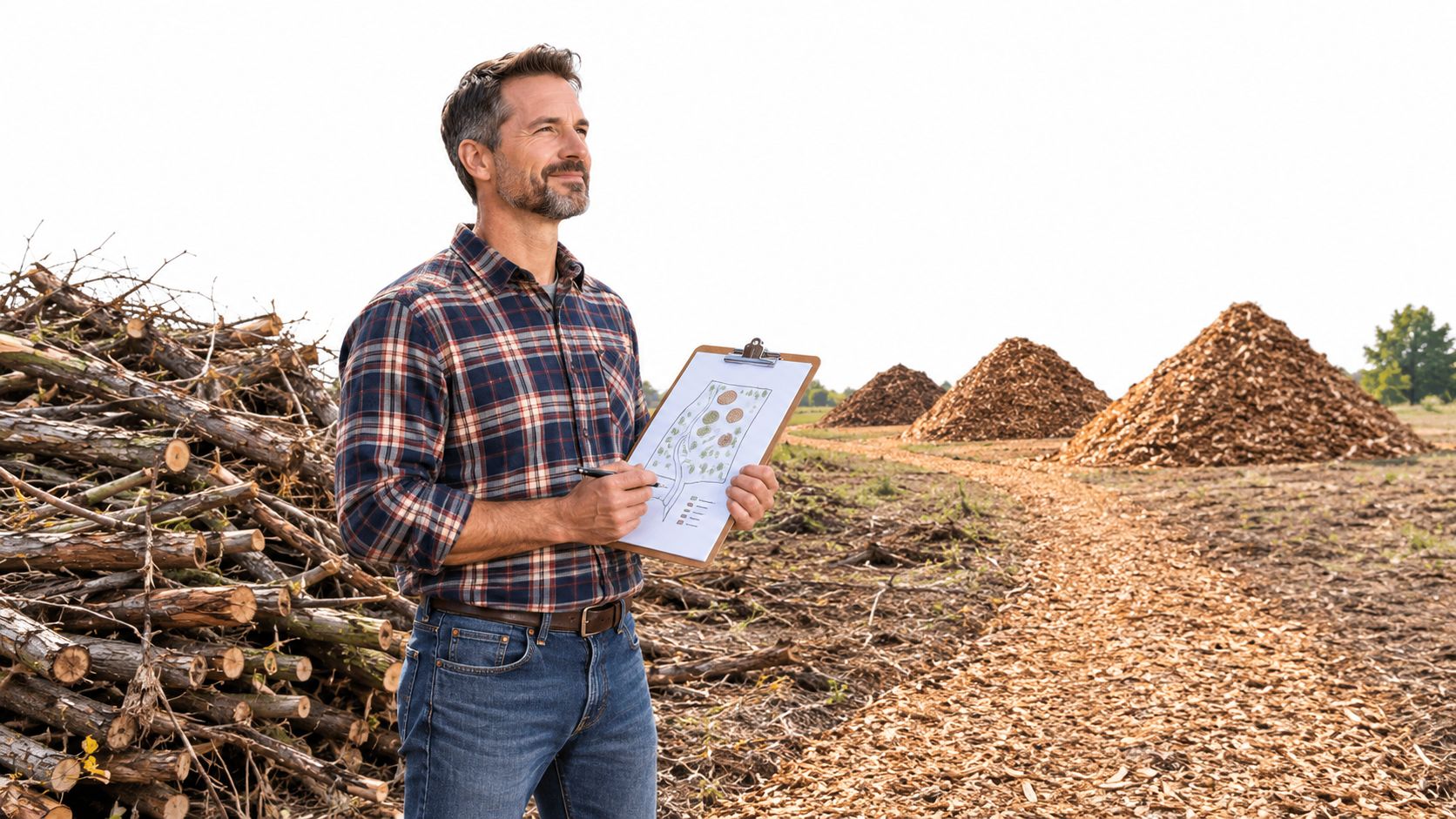
Mulching often reduces hauling because the material stays on the property. The mulch can help protect exposed soil and support organic matter where conditions allow. It may not suit a future foundation, septic area, driveway base, or precisely graded homesite, where buried woody material and uneven organic cover can interfere with later work.
Cut and haul
Traditional clearing cuts vegetation, gathers it, loads trucks, and transports it to a disposal site. This is appropriate when the landowner needs a clean surface, wants no mulch left behind, or must remove material from a construction or access area.
The handling cost can be substantial. One independent pricing summary reports that hauling debris off-site can add roughly $5,200 per acre compared with processing brush in place (Daniel Dean's brush-removal cost factors). That figure illustrates the scale of the difference, but your actual cost depends on pile volume, travel, loading conditions, facility charges, and local logistics.
| Method | Best For | Debris Handling | Relative Cost |
|---|---|---|---|
| Hand clearing | Selective work around structures, fences, and desirable trees | Cut, stack, load, or leave by agreement | Higher labor intensity |
| Forestry mulching | Broad brush reclamation and access improvement | Processed on-site | Often lower handling burden |
| Cut and haul | Construction areas and debris-free finishes | Loaded and transported off-site | Higher logistics burden |
Ask for the finished condition in plain language. “Mulched” and “cleaned up” can mean different things to different contractors. A good proposal describes the remaining material, travel paths, piles, stumps, and surface condition.
Getting an Accurate Estimate for Your Acreage
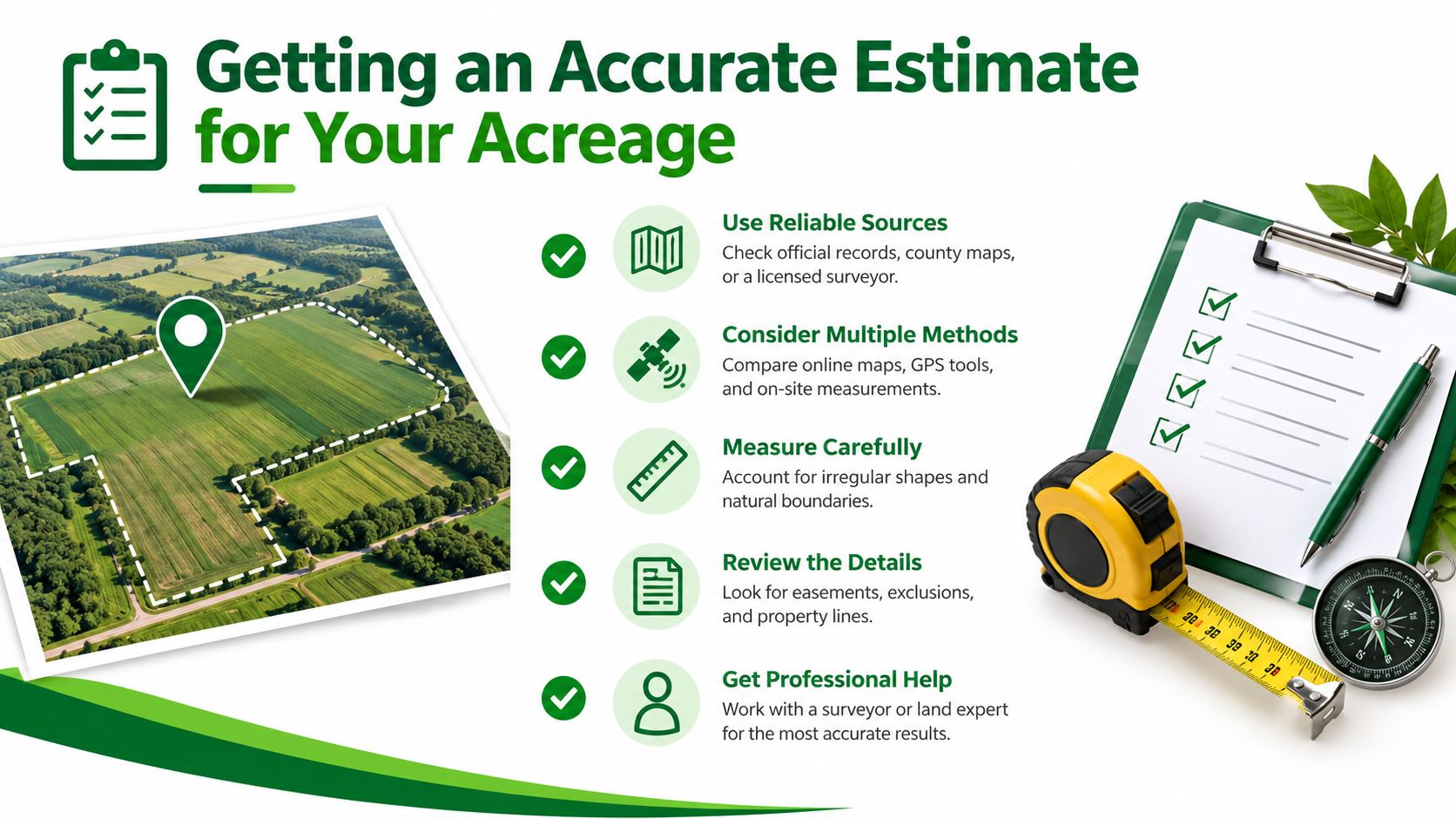
A satellite image can show vegetation cover, but it can't show the hidden fence wire, buried concrete, soft drainage crossing, or the tree you want preserved beside the future homesite. A phone estimate can help with an initial conversation, but serious budgeting requires an on-site walkthrough.
Start with the intended use
Tell the contractor what the property needs to become. A pasture reclamation project has different priorities from a homesite, trail system, hunting access route, fence corridor, or pre-sale cleanup. The desired outcome determines whether the crew should mulch, haul, selectively clear, grub, grade, or leave specific areas untouched.
During the walkthrough, mark or discuss:
- Boundaries: Confirm which land is included and identify uncertain edges before equipment enters.
- Keep areas: Point out mature oaks, shade trees, native vegetation, structures, wells, tanks, and habitat features.
- Obstacles: Look for old wire, foundations, abandoned vehicles, rocks, culverts, low branches, and buried hazards.
- Access routes: Review gates, driveway width, slopes, turning areas, and the route for trailers and machines.
- Drainage: Identify waterways, wet spots, eroding slopes, and ground that should not receive heavy traffic.
- Finish requirements: Define whether the result should be mulched, stacked, hauled away, stump-free, mowable, or ready for a later trade.
Ask questions that expose the real scope
Ask who handles unexpected debris, whether additional work requires approval, and how the contractor protects trees outside the clearing limits. Ask whether the proposal includes travel, equipment mobilization, fuel, hand cleanup, disposal, and a final walkthrough.
You can also use a local brush-removal guide for San Antonio properties as a starting point for describing regional site conditions, but don't treat any online range as a substitute for inspection. The strongest estimate connects a visible site condition to a specific work decision.
Get the proposal in writing
A useful quote identifies the work area, clearing method, equipment, exclusions, debris plan, and final condition. It should also state what happens if the crew finds hidden fencing, unsuitable soil, or material outside the agreed limits. If the contractor won't define those basics, the low number may only represent the easy portion of the job.
Smart Strategies to Save Money on Clearing
The safest savings come from reducing uncertainty and unnecessary handling, not from asking a crew to work faster than the site allows. Prepare the property so the operator can spend machine time on vegetation instead of searching for boundaries, moving personal items, or solving avoidable access problems.
Prepare before the equipment arrives
Mark property corners and clearing limits with visible stakes or flagging. Identify trees to preserve, photograph sensitive areas, and remove trailers, scrap, wire, livestock panels, toys, and other personal property from the work zone. Tell the contractor about wells, septic systems, buried lines, old foundations, and areas that become soft after rain.
If the brush is already cut and stacked near a truck-accessible road, ask for a haul-away-only price. The Dropcurb cost comparison distinguishes simple truckload removal from full clearing, and that distinction can prevent you from paying a clearing crew to perform work you've already completed.
Reduce unnecessary hauling
Where the finished use permits it, compare in-place mulching with cut-and-haul. Processing material on-site can avoid loading and disposal logistics, while leaving a protective organic layer. It isn't suitable everywhere, especially where you need excavation, grading, or a clean construction pad, so make the decision based on the next land-use step.
Don't pay to export material that the property can safely use. If mulch won't interfere with drainage, access, planting, or construction, in-place processing may create more value than hauling.
Phase the work around priorities
A large property doesn't always need full clearing at once. Start with the homesite, driveway approach, fence line, livestock area, or primary trail. A defined first phase gives you usable access and better visibility, and it can reveal drainage or grading needs before you commit to broader work.
Schedule around ground conditions when possible. Dry, firm soil generally gives machines more reliable access and reduces rutting, but local weather and contractor availability still matter. The right timing is the period when the crew can work safely without creating repair work that erases the savings.
Evaluating Proposals and Planning Next Steps
A low quote only saves money if it produces the land you actually need. Compare proposals by scope first, then price. One contractor may include selective tree protection, in-place mulching, hand cleanup, and an owner walkthrough. Another may price only machine time and leave the rest for you.
Compare the finished result
Put each proposal beside the same checklist:
- Clearing limits: Does the map or description show exactly what gets worked?
- Vegetation scope: Are brush, saplings, vines, deadfall, and small trees included?
- Equipment: Is the contractor using a forestry mulcher, skid steer, excavator, brush cutter, chainsaw crew, or a combination?
- Tree protection: Are desirable mature trees identified and excluded from the work path?
- Debris plan: Is material mulched, stacked, burned where permitted, loaded, hauled, or left on-site?
- Stumps and roots: Are they retained, ground, excavated, or excluded?
- Access and soil: Does the contractor address gates, slopes, drainage, rutting, and restoration?
- Change orders: What conditions trigger additional work, and who approves it?
- Closeout: Will you receive a final walkthrough and a clear explanation of remaining work?
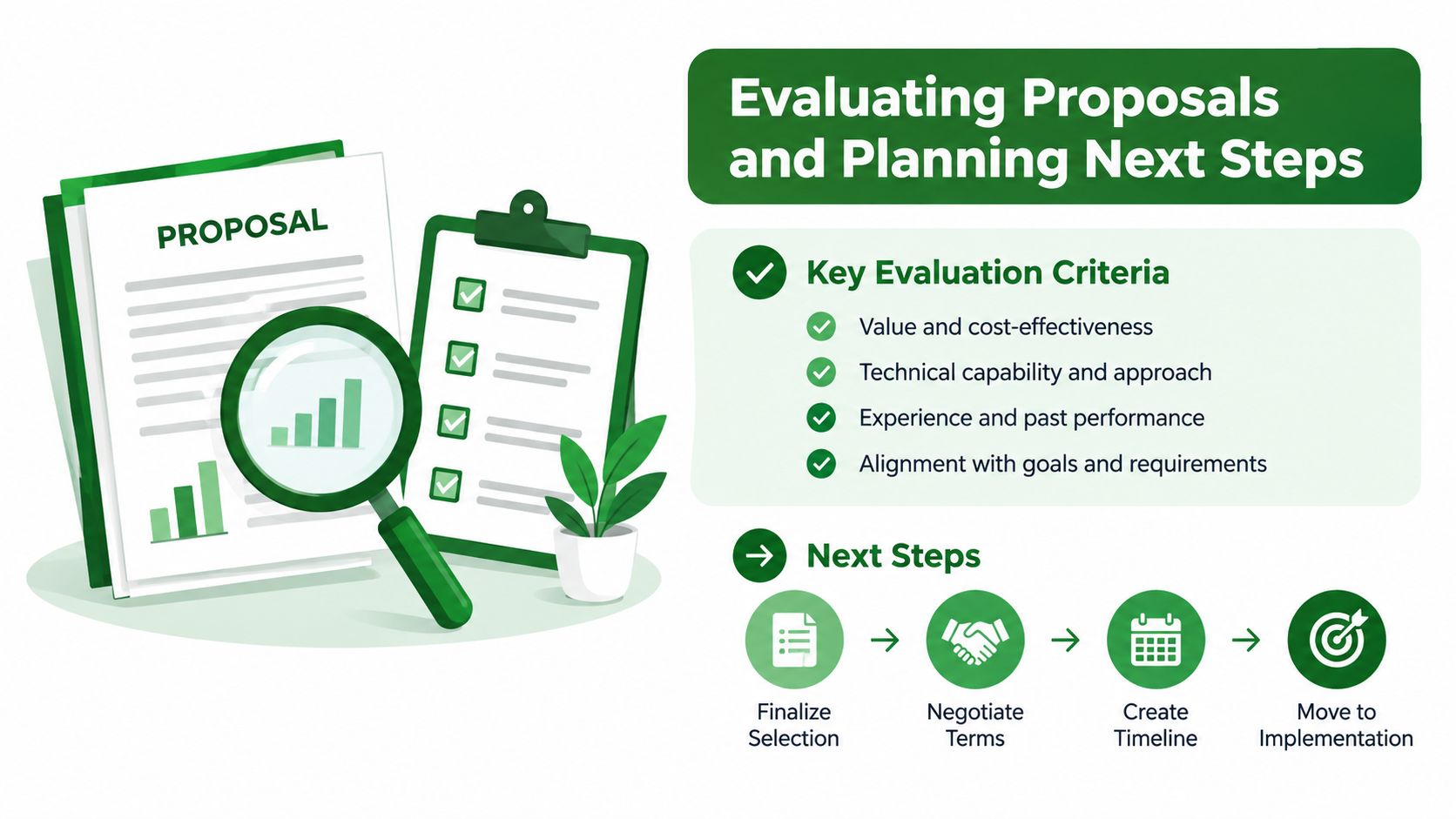
The equipment should match the outcome. A mulcher can reclaim dense understory efficiently, but it won't automatically create a level building pad. Hand clearing protects tight areas, but it may not be economical for broad acreage. Cut-and-haul delivers a debris-free result, but transportation and disposal can dominate the budget.
Fieldmark Land Co. provides brush clearing, selective clearing, forestry mulching, fence-line and trail access, pasture reclamation, homesite preparation, and ongoing land management for rural and small-acreage properties around San Antonio and South-Central Texas. Its process begins with a property walkthrough that considers vegetation, terrain, access, boundaries, desirable trees, sensitive areas, and the landowner's intended use.
Choose the proposal that makes the next property improvement easier, not merely the one with the smallest opening number.
Before signing, confirm the work area, method, debris destination, exclusions, cleanup standard, and approval process for surprises. Then choose a contractor who can explain how the cleared ground will function after the machines leave.
If your acreage is overgrown, Fieldmark Land Co. can assess the property and define a practical scope for brush clearing, forestry mulching, selective clearing, access, fence lines, or a homesite. Visit Fieldmark Land Co. to request a property review and plan the next step around how you want to use the land.