Fence Line Clearing Cost Guide Texas: 2026 Pricing & Tips
Understand fence line clearing cost in Texas. See per-foot pricing, hidden fees, and tips to save on brush removal for rural San Antonio properties.
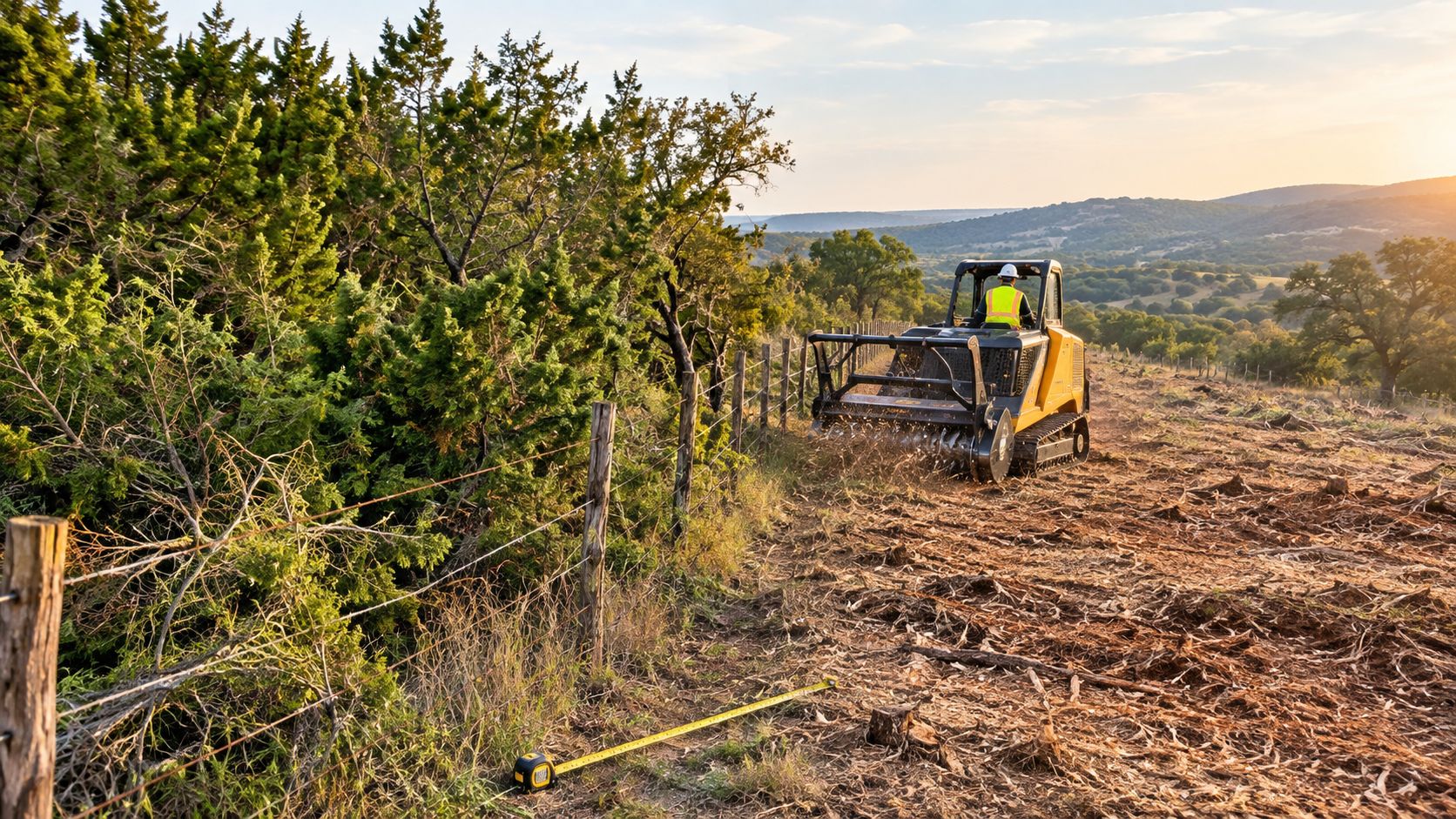
In Texas brush-heavy regions, fence-line clearing often runs 30% to 50% of the total fence budget, with costs ranging from $0.25 to $8 per foot depending on vegetation density and site conditions. Light grass may be inexpensive to cut, while heavy cedar, mesquite, tangled wire, and stump work can push the job toward the high end.
A landowner usually discovers the problem while walking an old boundary with a fence contractor. The posts are somewhere under cedar limbs, mesquite stems, vines, and waist-high weeds. What looked like a straightforward fencing project becomes a narrow land-clearing job with equipment access, debris handling, and possible fence tear-out folded into the estimate.
The mistake is budgeting only for posts, wire, and installation. The fence line clearing cost can determine whether the project stays manageable or becomes the largest part of the improvement.
Table of Contents
- The Hidden Cost of an Overgrown Boundary
- How Much Does Fence Line Clearing Cost Per Foot
- When Per-Foot Pricing Breaks Down
- Sample Job Scenarios and Back-of-Envelope Math
- Smart Ways to Reduce Your Clearing Bill
- Choosing Between Brute Force and Selective Clearing
The Hidden Cost of an Overgrown Boundary
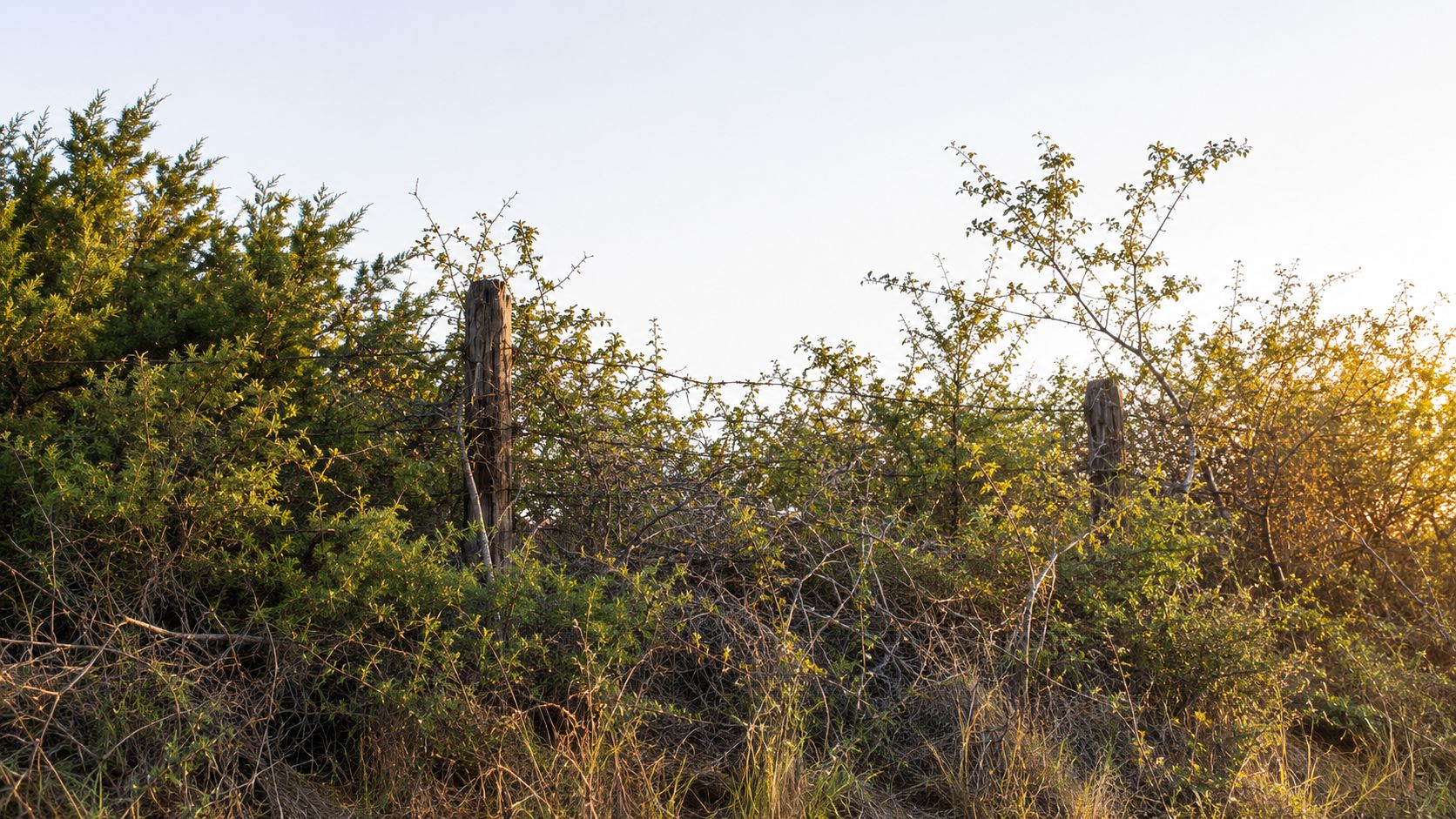
The fence plan looks simple until the route disappears. Cedar leans across old wire, mesquite grows through the strands, and weeds hide the post line. A machine may not reach the boundary until the crew opens a working path first.
That preparation affects the fence line clearing cost before any new posts go in. Crews need a usable corridor, room to set posts, and access for equipment and materials. Poor access can add repositioning time, hand cutting, debris handling, and repairs to sections of old fence.
Why the boundary becomes expensive
Vegetation density sets only the starting point. Light weeds may require a quick pass, while woody brush demands slower cutting and repeated work. The crew must also decide whether to leave cut material in a safe location, stack it, chip it, or haul it away.
Old wire often creates the largest hidden charge. A mulcher can be damaged by buried strands, so the crew may need to stop, cut the brush by hand, pull out tangled wire, and separate posts or staples. Fallen trees and stumps add more handling. Stump grinding is a separate operation when the fence route must be clear at ground level, and it can raise the bill well beyond a basic brush-cutting visit.
Selective clearing can control that cost. Remove growth that blocks the post line and equipment access, while leaving stable trees and vegetation outside the working corridor. Full clearing may look cleaner, but it creates more material to process and more ground to disturb.
Practical rule: Price the usable fence corridor, not just the distance between the corner posts.
Central Texas contractor guides place light grass at the low end and tangled-wire heavy brush at the high end, detailed in the pricing section below. The actual quote depends on how much of the corridor needs hand work, disposal, access preparation, and stump treatment.
The lowest bid may cover cutting only. Ask whether the scope includes old-wire removal, stump work, debris placement, hauling, equipment access, and a corridor wide enough for the fence crew that follows. A clear scope prevents a low starting price from becoming a larger final bill.
How Much Does Fence Line Clearing Cost Per Foot
A per-foot quote is useful when vegetation and access stay fairly consistent. Walk the boundary, divide it into light, medium, and heavy stretches, and request pricing based on that mix. This produces a better planning figure than describing the entire property as one type of brush.
A Texas pricing guide lists this working range:
| Vegetation condition | Reported clearing range |
|---|---|
| Light brush | $1.00 to $1.50 per foot |
| Medium brush | $1.50 to $2.50 per foot |
| Heavy brush | $2.50 to $4.00 per foot |
The ranges come from the Texas fence-line clearing price guide. Use them as a planning reference, not a guaranteed bid. A short corridor with poor access, mature trees, tangled wire, or stumps can cost more than a longer route with open ground and evenly distributed brush.
Turning the rate into a rough budget
For a quarter-mile of light brush, the guide places the rough cost at $1,320 to $2,000. For a full mile, it indicates about $5,280 to $21,120, depending on vegetation density and the work included. These figures help set expectations, but an on-site inspection still determines the actual price.
Another Central Texas source shows a wider range, from $0.25 to $0.75 per foot for light grass and weeds to $4 to $8 per foot where heavy growth is tangled with an old fence. That spread reflects the hidden work that can change a quote quickly. Hand-cutting around wire, extracting posts, grinding stumps, placing debris, and hauling material may all sit outside a basic brush-cutting rate.
Mark the route in sections before requesting bids:
- Light sections: Grass, weeds, and small growth that do not obstruct equipment.
- Moderate sections: Brush requiring mechanical cutting and repeated passes.
- Heavy sections: Cedar, mesquite, trees, stumps, or wire buried in the growth.
Selective clearing can keep more of the corridor in the lower or middle range. Clear the post line and equipment path, while leaving stable trees and vegetation outside the working area when they do not interfere with the fence. For a broader comparison of vegetation removal methods, review this guide to brush removal prices.
Ask what condition the corridor will be in when the fence crew arrives. A low per-foot figure may cover cutting only, while wire removal, stump grinding, debris placement, hauling, and access preparation can substantially raise the final bill.
When Per-Foot Pricing Breaks Down
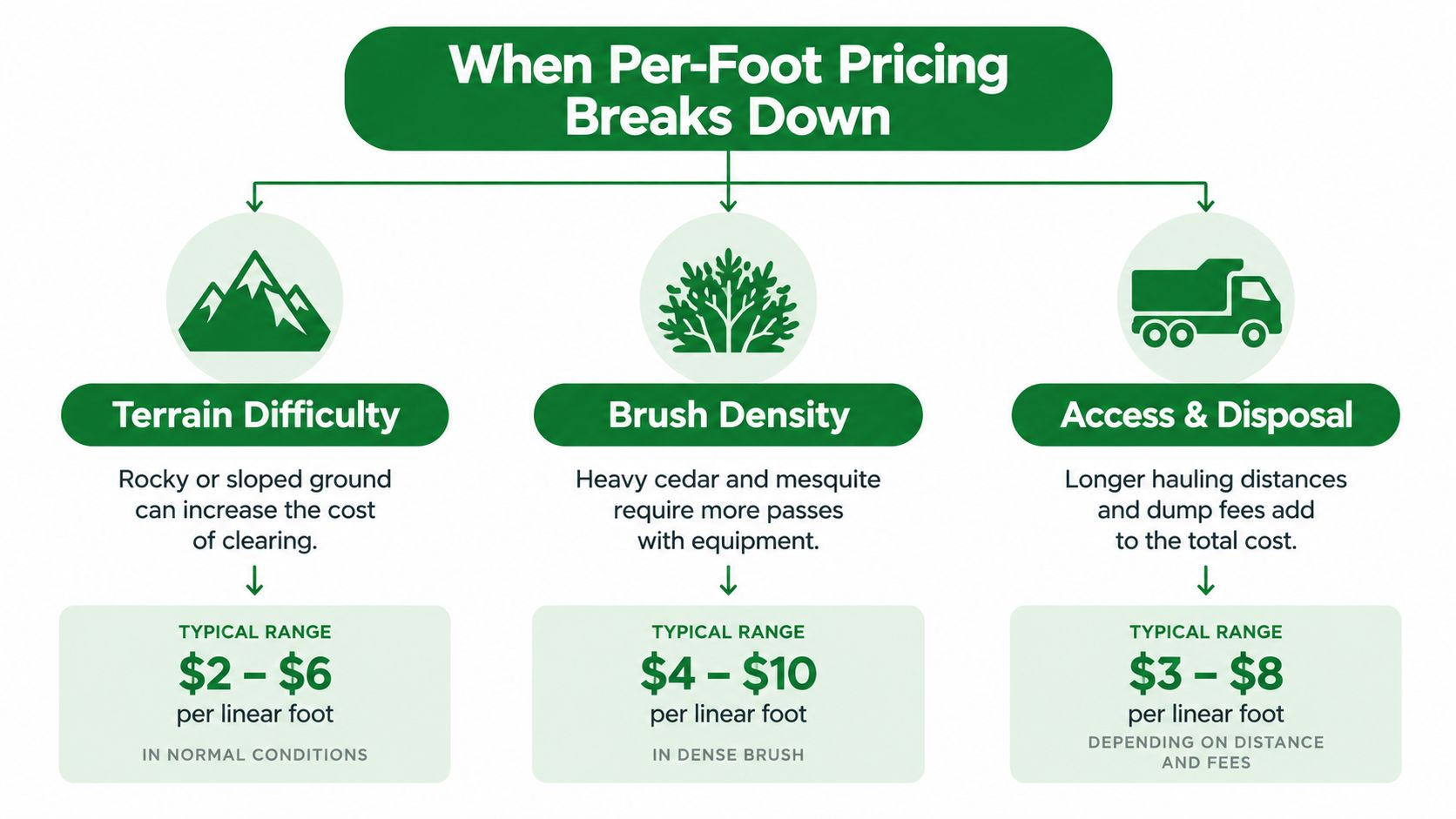
A linear-foot quote assumes that each foot takes roughly the same amount of work. Rural fence lines rarely behave that way. A narrow corridor on a steep slope, behind a locked gate, or buried in woody growth can take more labor and equipment time than a wider line with light vegetation.
For longer corridors, contractors may estimate the cleared area by multiplying width by length, then adjusting for slope, access, terrain, and debris handling. A right-of-way clearing benchmark places work at roughly $1,000 to $2,750 or more per acre equivalent, with growth thickness, terrain, slope, and access driving the range. The right-of-way clearing benchmark explains why corridor difficulty can matter more than nominal mileage.
The four conditions that change the math
Clearing width affects machine movement and debris volume. A line that only needs post access is a different job from one that must accommodate trucks, fence materials, livestock inspections, and future maintenance.
Slope and terrain slow production. Rocky ground, gullies, uneven grades, and soft areas can limit machine size and require more hand work. The contractor may also need to protect drainage paths instead of just scraping across them.
Access creates fixed costs. If equipment can't travel the boundary, the crew may need additional trail work, more repositioning, or smaller machines. Mobilization becomes a larger share of a short project.
Disposal and follow-on work can change the final total. A source cited in the brief notes that debris removal can add $100 to $800, while stump and tree removal can add materially to the project. Old wire may require tear-out, and a damaged fence may need repair before the line is functional again.
A per-foot number is only reliable when the conditions behind each foot are similar.
The brush clearing service guide is useful for comparing broader vegetation-removal scopes, but a fence corridor still needs a property-specific walkthrough. Ask the contractor to separate clearing, fence tear-out, stump work, hauling, and access restoration so you can see which item is driving the estimate.
Sample Job Scenarios and Back-of-Envelope Math
The right estimate depends on the finished condition, not just the length of the fence line. A maintenance pass, a new corridor, and a full reclamation project carry different labor, equipment, and cleanup requirements.
Narrow maintenance clearing
A lightly overgrown boundary may only need brush cut back so the wire can be inspected and routine repairs completed. The lower end of light-brush pricing may apply when equipment can reach the line and there are no stumps, buried wires, or damaged sections to remove.
The hidden cost driver is usually the cleanup plan. If cut material stays in place, the crew can finish sooner. Chipping, piling, or hauling adds handling time and equipment use. Confirm whether the quote includes wire removal, because maintenance clearing normally leaves sound fencing in place.
New corridor creation
A new fence through medium brush needs a working route for posts, materials, and the installation crew. The contractor may clear an access trail, remove saplings along the post line, and mulch suitable debris in place. Those tasks can change the total even when the vegetation price looks straightforward.
The Texas price ladder places medium brush at $1.50 to $2.50 per foot, as documented in the Texas fence-line pricing source. A quarter-mile corridor at that rate is approximately $1,980 to $3,300 for clearing. That figure excludes fencing materials, gates, unusual access work, and disposal.
Full reclamation
A boundary buried in cedar or mesquite needs a project-based quote when the corridor width and access conditions vary. Heavy brush rates in one Central Texas guide run $2.50 to $5 per foot, while tangled old fencing is listed at $4 to $8 per foot. Review the heavy brush and tangled fence pricing ranges before comparing bids.
Wire tear-out and stump grinding are the costs most likely to change the final bill. They require separate labor and equipment from brush cutting, and hauling may add another charge. A contractor may price by cleared area instead of by foot when reclamation, access preparation, and debris handling control production.
The finished corridor should allow straight installation, easy inspection, and future repairs. A low cutting price is not a saving if the fence route remains difficult to use.
Smart Ways to Reduce Your Clearing Bill
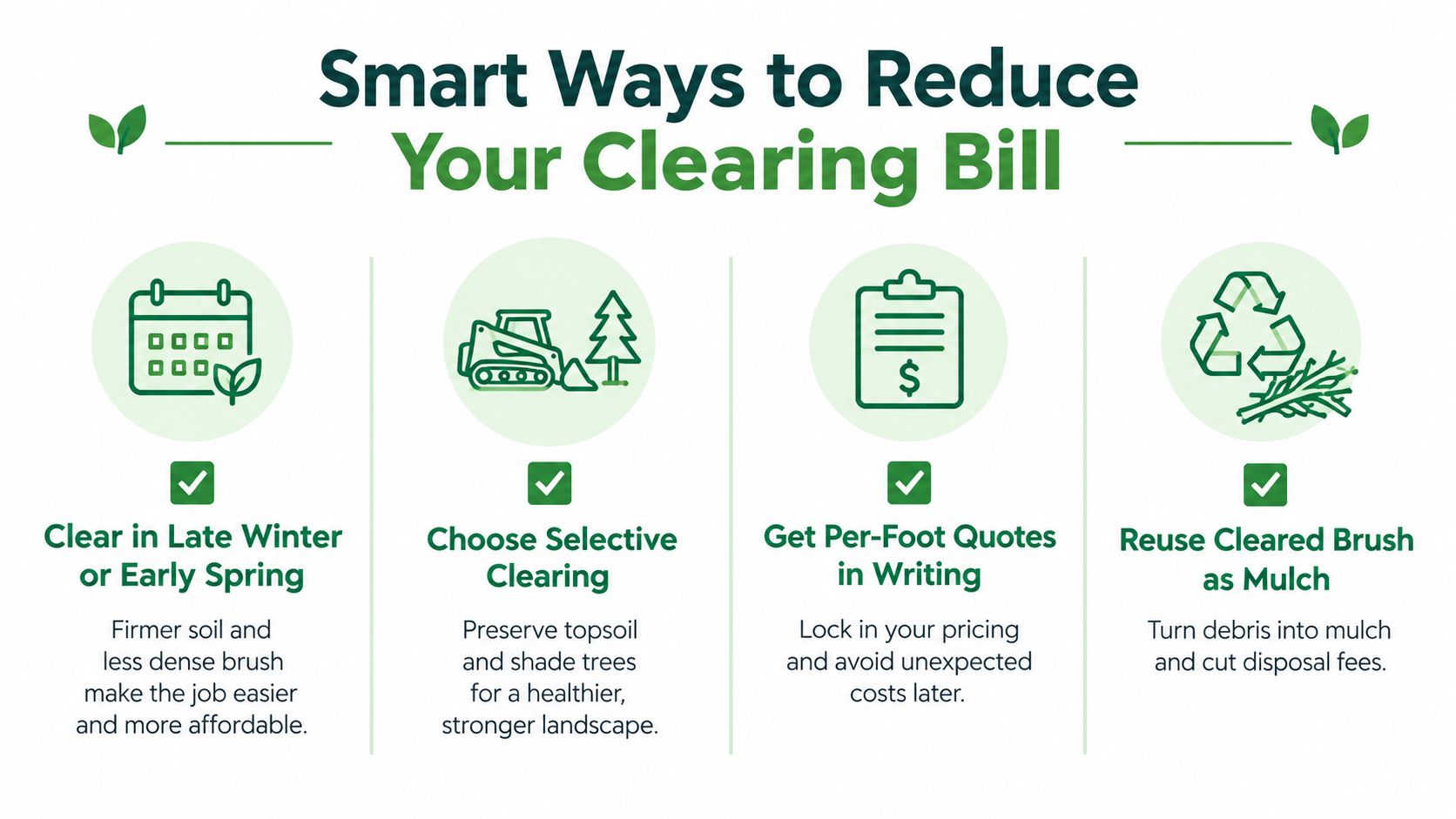
Cost control starts with a clear scope, not with asking a crew to cut faster. A contractor can often reduce unnecessary work when the landowner identifies the fence route, protected trees, access points, debris plan, and desired finished condition before equipment arrives.
Schedule for workable ground
Late winter or early spring can be a practical window in Texas when soil conditions are firmer and brush may be less dense. The exact timing depends on local weather and the property, but avoiding saturated ground helps reduce rutting, cleanup, and later access repairs.
Coordinate clearing close to fence installation when possible. If the line sits open for too long, regrowth can narrow the working corridor before posts and wire arrive.
Clear selectively
Selective clearing removes the growth that blocks the fence while preserving desirable mature trees, shade, and stable ground. It also reduces the amount of material that must be hauled away compared with indiscriminate scraping.
A forestry mulcher can process suitable brush in place, leaving organic material on the ground where conditions allow. Chainsaws, excavators, or a stump grinder may still be appropriate for large trees and stubborn stumps. The economical method is the one matched to the material, not the one used across every part of the property.
Require a written scope
Ask each contractor to identify:
- Included clearing: State the corridor width and vegetation the price covers.
- Wire and fence removal: Confirm whether tangled old fencing is included or billed separately.
- Stump treatment: Specify whether stumps are cut low, ground, dug out, or left.
- Debris handling: State whether material is mulched, piled, burned where allowed, or hauled.
- Access work: Include gates, trail opening, slope limitations, and equipment movement.
Get more than one site-specific quote, but compare scopes rather than totals alone. A lower bid that leaves wire, stumps, or debris behind may cost more once another crew has to finish the corridor.
Choosing Between Brute Force and Selective Clearing
Bare-earth scraping has an obvious appeal. It creates a visibly open strip and can make a neglected boundary look finished quickly. But the method may disturb topsoil, remove useful shade, create unnecessary debris, and leave a corridor that regrows aggressively after the first rain.
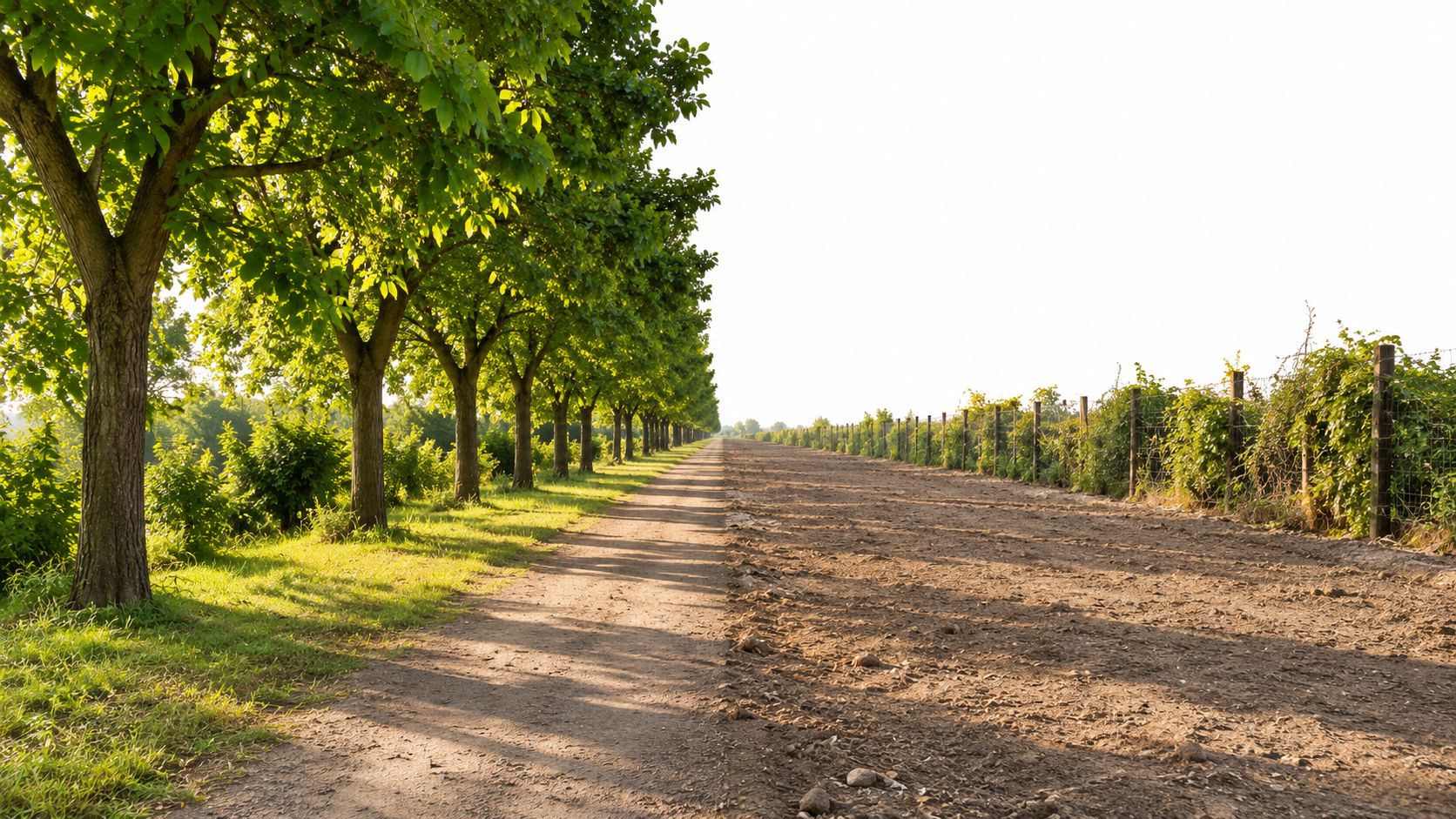
Selective clearing takes more judgment at the start. The operator identifies the actual fence route, protects trees worth keeping, removes interfering understory, and opens enough ground for posts, inspection, and maintenance. Forestry mulching can process suitable woody growth in place, reducing hauling and avoiding a long line of debris piles.
Comparing the finished outcomes
| Approach | Useful when | Main trade-off |
|---|---|---|
| Brute-force scraping | The entire corridor must be rebuilt or graded | More disturbance and potential hauling |
| Selective clearing | The fence needs access while desirable vegetation stays | Requires careful layout and equipment control |
| Forestry mulching | Brush and smaller woody growth can remain processed on site | Large stumps and wire still need separate handling |
| Hand and mechanical combination | Trees, wire, and tight boundary sections need precision | More coordination between methods |
In Bexar and Hill Country properties, the right choice often depends on the intended use. A livestock fence may need a clean inspection path, while a recreational boundary may benefit from retained canopy and a lighter touch. A new homesite corridor may require more thorough stump work than a line that only needs seasonal visibility.
For a method focused on processing suitable brush in place, review this forestry mulching service. The important question is not whether the ground looks completely bare on the day the crew leaves. It is whether the fence line remains accessible, stable, inspectable, and manageable after the initial clearing.
The video below shows the kind of equipment and land-improvement work that can shape a finished access corridor.
A sound quote should account for the boundary itself, the vegetation, the equipment route, and what happens to the material after cutting. Fieldmark Land Co. offers selective clearing, forestry mulching, brush removal, access improvements, and fence-line clearing for rural properties around San Antonio and surrounding South-Central Texas communities. Visit Fieldmark Land Co. to request a property walkthrough and define a fence corridor that fits your fencing, livestock, access, and long-term land-management plans.