Land Clearing Texas Guide for Rural Acreage Owners
Land clearing Texas guide covering Hill Country brush, permits, timing, costs and selective clearing best practices for San Antonio acreage owners.
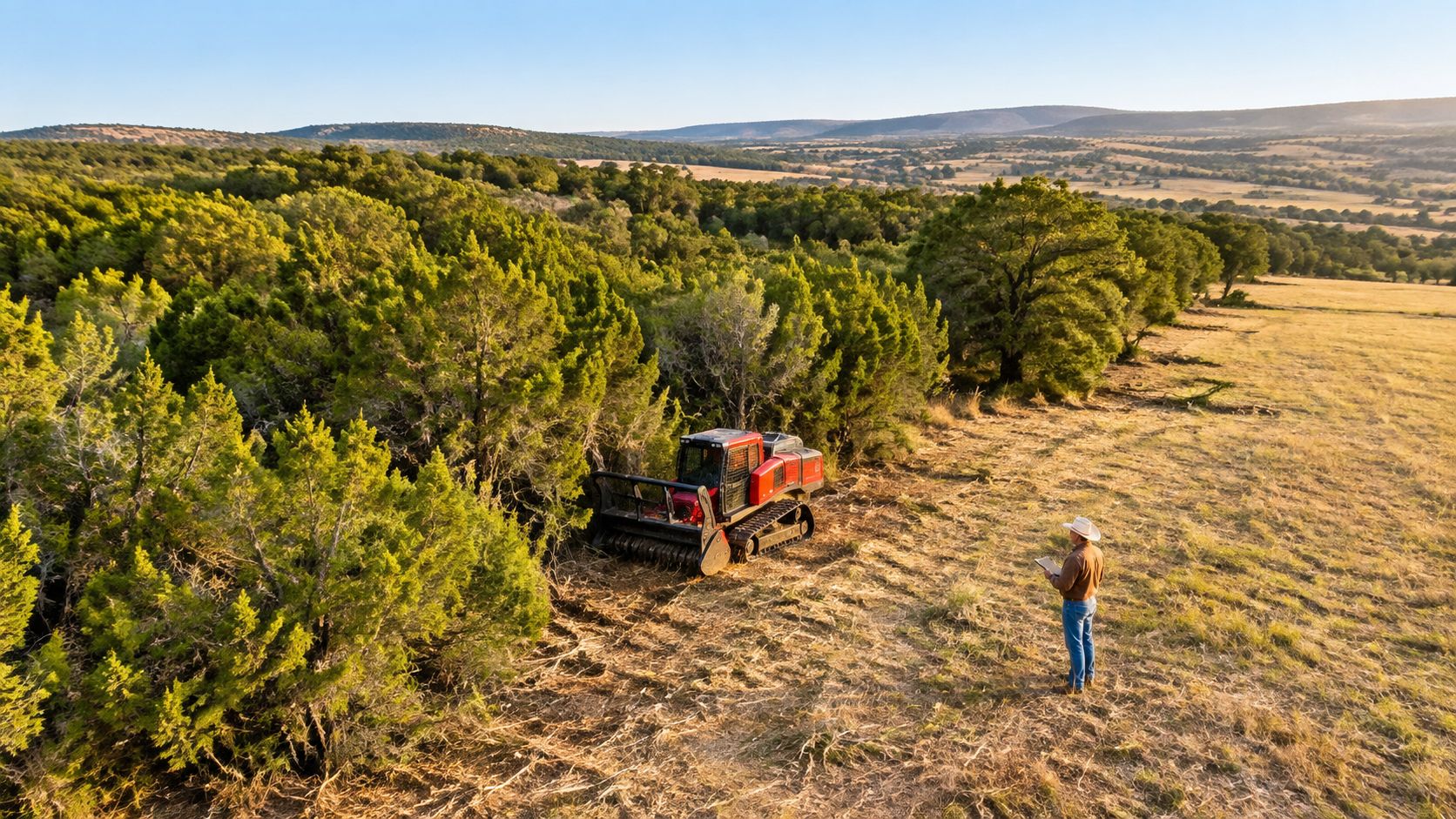
You're standing on a piece of Texas dirt that looked like a bargain on paper, then turned into a wall of cedar, yaupon, and fence-line tangles the first time you walked it. You can see the shape of the land in spots, but not the use of it yet. That's the starting point for land clearing Texas property owners need, not with a machine, but with a decision about what the ground ought to do next.
For a new acreage owner, the hard part isn't just brush. It's deciding whether this place needs a homesite, pasture, trails, a clean fence corridor, or a safer, easier-to-manage layout. On Texas ground, that question matters because clearing isn't a one-time wipeout, it's a management choice shaped by access, drainage, and what you want to keep.
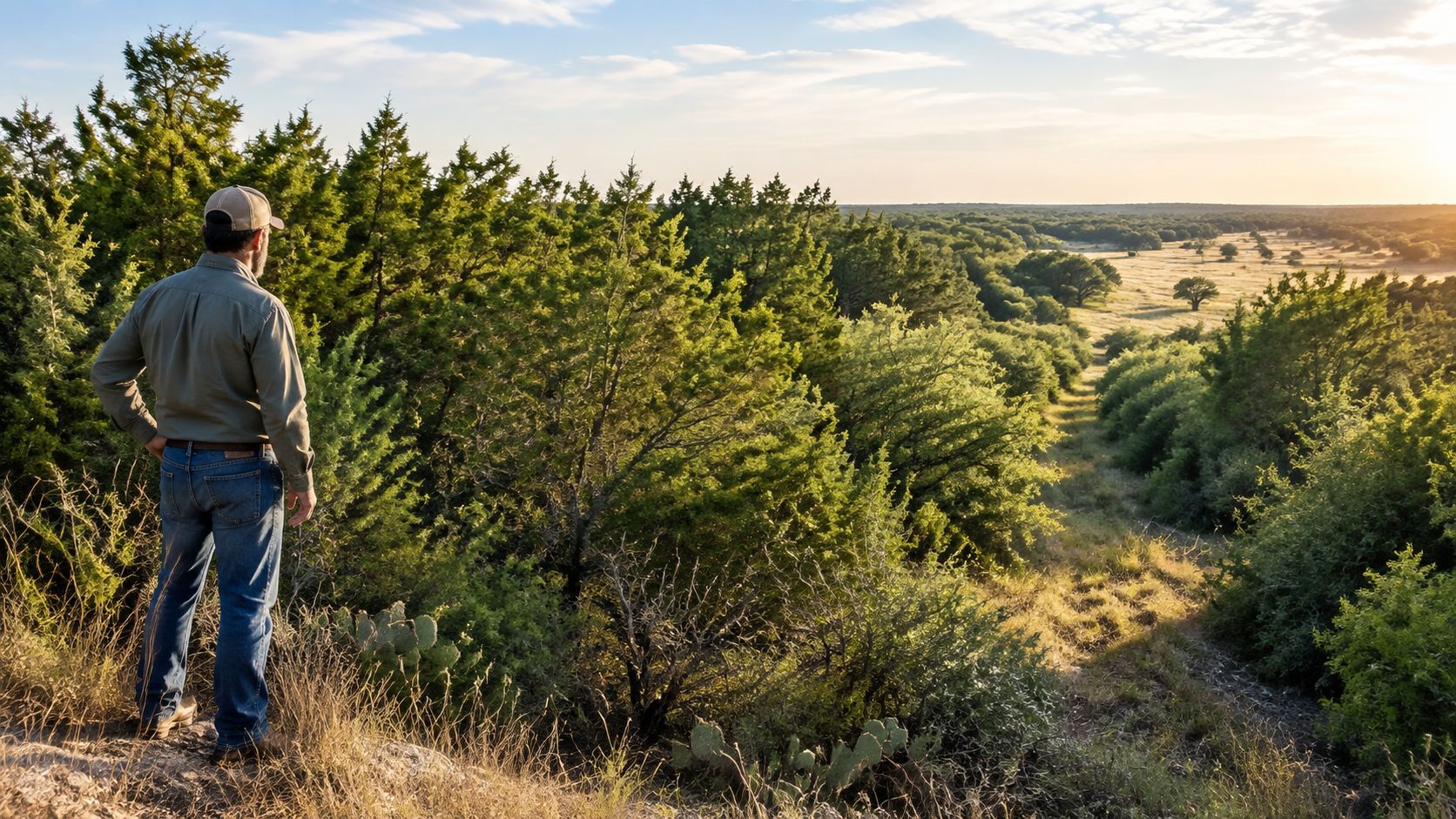
A good plan starts with the end use. If the land needs to support cattle, a driveway, a build site, or a future sale, the clearing method should fit that goal instead of flattening everything in sight. That's the difference between improvement and just making a mess.
Table of Contents
- Introduction to Land Clearing on Texas Acreage
- Why Texas Land Gets Overgrown So Quickly
- Reading Your Property Before You Clear Anything
- Choosing the Right Clearing Method for Your Goals
- Timing Permits and Protecting Your Soil in Texas
- What Land Clearing Costs and How to Phase the Work
- Turning Cleared Land Into Manageable Property for the Long Term
Introduction to Land Clearing on Texas Acreage
A lot of landowners reach the same moment in the same way. They open a gate on a property they just bought, or they walk behind an old barn on family land, and the place feels more like a thicket than acreage. The brush has filled in the gaps, the fence line is hard to find, and the first question is usually, “Where do I even start?”
The right answer is rarely, “Clear it all.” On Texas acreage, the smarter move is to decide what the land should be used for, then clear only what gets in the way of that use. A homestead site needs different treatment than a pasture. Trails need a different opening than a sale-ready cleanup. Mature oaks, drainage swales, and useful shade often deserve to stay.
That use-first approach is how practical land managers think about land clearing Texas owners can live with long term. It keeps the work tied to the property's purpose, not to whatever the equipment can scrape in a day. It also saves you from turning a usable wooded place into bare dirt that's harder to maintain later.
Texas ground brings its own rules, too. Brush grows back, slopes erode, and some work is better done seasonally than by the calendar. This guide walks through how to read the land, how to choose a method, how timing and local rules affect the job, and how to think about maintenance instead of one-and-done cleanup.
Why Texas Land Gets Overgrown So Quickly
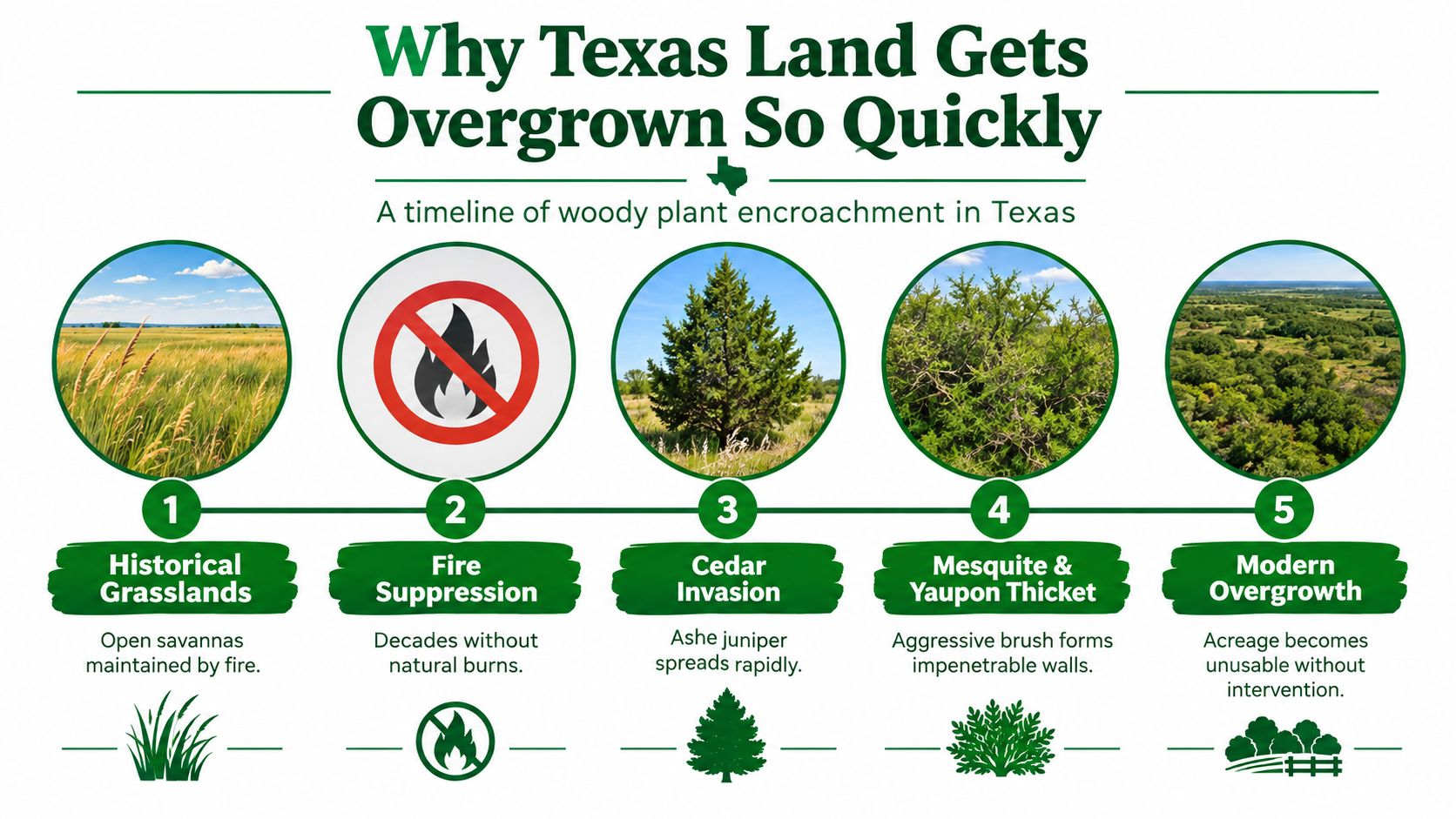
Texas overgrowth is usually a sign that the place is doing what Texas land does when it is left alone. Brush fills edges first, then corners, then the spaces people stop using. A rangeland review shows that woody plants had already become a major concern by the 1890s, with estimates of up to 26 million hectares of affected rangeland in the woody vegetation review.
Brush Works Like a Slow Tide
Brush spreads the way water creeps into low ground. It starts where the property is weakest, along fence lines, creek edges, field margins, and spots that no one crosses often.
That same study found that on one central Texas site, woody cover shifted from 62.0% in 1937 to 64.2% in 2004, while 32% of the area changed between woody and nonwoody pixels during that time. The same study also reported small-scale woody vegetation loss ranging from 11.1% to 12.6% of the study area across the analysis period. The point is simple. Clearing and regrowth have been working against each other for a long time, so selective maintenance usually matters more than one big scrape.
That is why a good plan keeps mature oaks when they offer shade, structure, and value, then removes cedar, yaupon, mesquite, and volunteer saplings that block use. A property can still hold habitat and character while opening trails, improving access, and reclaiming ground for work or grazing. Ask what needs to stay, and what is in the way.
Practical rule: If you only clear once, regrowth comes back later. If you clear with the next five years in mind, the land stays easier to manage.
Reading Your Property Before You Clear Anything
Before a skid steer or mulcher shows up, walk the land like you're drawing a map in your head. Start at the gate, then follow the places you'd want to drive, walk, fence, or build. The goal is to separate keep areas from problem vegetation before anyone starts cutting.
A useful way to do that is to mark what matters in the field, not back at the kitchen table. Mature oaks, a future homesite, a pond edge, a low crossing, or a natural trail line should all be treated differently from tangled cedar or yaupon that blocks movement. If a tree offers shade and structure and doesn't interfere with use, it may belong in the keep list.
Where the land gets confusing is usually where water moves. Creek beds, drainage swales, and low pockets can look like just more brush, but they often shape where clearing should stop or thin out. On steep or rocky spots, the question becomes less about opening everything and more about protecting the soil that holds the place together.
Keep the land's job in mind. A good clearing plan isn't a cleanup list, it's a use map with a few careful cuts.
A simple walkthrough checklist helps keep the scope sane:
- Keep Areas: mark mature trees, useful shade, and anything that gives the property character.
- Problem Thickets: note the dense cedar, yaupon, or volunteer growth that blocks access.
- Access Bottlenecks: flag narrow gate entries, fence lines, and spots where equipment might not fit.
- Drainage Patterns: trace low spots, runoff paths, and seasonal creek bottoms.
- Soil and Slope: pay attention to rocky grades, soft ground, and erosion-prone banks.
- Future Use Zones: sketch out homesite, pasture, trails, and staging space.
If you're reclaiming ground for grass or grazing, the internal guide on pasture reclamation is a useful companion. A clean scope now keeps the contractor from treating the whole tract like one blank sheet of paper.
Choosing the Right Clearing Method for Your Goals
A new acreage owner often wants one answer for the whole tract, but the land usually asks for a few different answers. The right method depends on what stays, what goes, and how you plan to use the ground after the work is finished. A homesite, a trail, and a cattle pasture each need a different finish, and the wrong choice can mean paying again to fix the result.
Start with the end use. If you want open movement with some cover left in place, a lighter touch makes sense. If you need a true reset for heavy brush or problem trees, the work has to go deeper. The point is to match the method to the job, the same way you would choose a fence repair for a broken wire and a tractor for a bigger pull.
Match the Method to the Finish You Want
Forestry mulching fits places where you want brush removed in place and the soil left covered. It works well for trails, access lanes, and selective cleanup where you want to keep the ground from looking scraped bare. Selective clearing is a good fit when mature trees matter and the understory is the part getting in the way.
Bulldozing is the harder reset. It can clear dense growth and create a blanker finish, but it also disturbs more surface and usually calls for more follow-up work. Hand clearing moves slower, yet it gives you control near tight corners, fence lines, keep trees, and other spots where a machine would do too much.
| Method | Best For | Vegetation Type | Site Impact |
|---|---|---|---|
| Forestry Mulching | Trails, access, selective cleanup | Brush, saplings, light to moderate woody growth | Low soil disturbance |
| Bulldozing | Larger reset areas, heavy removal | Dense brush and trees | Higher disturbance |
| Hand Clearing | Tight spaces, around keep trees | Mixed small-scale growth | Minimal disturbance |
| Controlled Burning | Maintenance in the right setting | Accumulated light fuel and brush | Variable, permit-sensitive |
The video below is helpful if you want to see how clearing styles differ in practice.
There is also a maintenance question hiding inside the method choice. Some approaches leave less debris but more regrowth pressure, while others clear harder up front and ask for less immediate touch-up. For a closer look at how scope affects that tradeoff, see land clearing services. If you are comparing options in the field, Fieldmark Land Co. is one local example of a contractor that scopes work around access, visibility, drainage, and intended use rather than treating the whole tract as one blank slate.
Timing Permits and Protecting Your Soil in Texas
A property can look ready for clearing, yet the calendar and the ground under it may be telling two different stories. Brush control works best when the plant is moving carbohydrates toward its roots, usually from late spring through summer. That is when treatment tends to move deeper into the plant. Drought-stressed or wilted brush often responds poorly. Year-round methods like basal bark, cut-stump, and hack-and-squirt still matter when the growth window does not line up with your work plan, as noted in Texas A&M AgriLife Extension's July 2026 newsletter.
The Permit Question Depends on Where the Dirt Is
A lot of landowners ask the wrong first question. They ask whether brush clearing needs a permit. The better question is which rule applies to this parcel.
In many unincorporated areas, private brush clearing may not need a county permit, but city limits, protected trees, drainage rules, and water-adjacent work can trigger local review in the Texas permit guide. Two tracts a mile apart can fall under different rules because one sits in open county land and the other falls inside a city extra-territorial area, subdivision, watershed, or tree-protection zone. Around San Antonio and other growing areas, that difference can change the whole job.
Walk the boundary first, then ask which jurisdiction has the final say.
A simple checklist helps:
- Check location first: city limits, unincorporated county, or a regulated overlay.
- Check the work type: brush clearing, tree removal, grading, or creek-adjacent disturbance.
- Check sensitive features: protected trees, drainage paths, or water influence.
- Check local review rules: if the parcel touches a city or watershed, ask before cutting.
Keep Soil in Place Where the Ground Is Fragile
Once the brush is off, bare ground can become the next problem. On steep, fragile, or highly erodible Texas sites, best practices call for contour-oriented work, temporary erosion controls, and stabilization with mulch, seed, or logging debris in Texas Forestry BMP guidance. The goal is simple, get cover back before runoff starts cutting channels.
Leaving organic material on site is often better than scraping the surface clean. Mulch and debris help hold the soil in place while water moves across the slope instead of digging into it. That matters most when the property is being shaped for pasture, trails, or a homesite, where later grading will already disturb the ground.
What Land Clearing Costs and How to Phase the Work
Cost follows scope, not just acreage. Two ten-acre properties can land in totally different buckets if one is open and the other is thick with cedar, hard-to-reach edges, and scattered keep trees. Terrain, access, debris handling, and how much handwork is needed around the trees you want to preserve all shape the final quote.
Phase the Work Like a Property Manager, Not a Weekend Hustler
The best phasing plan usually starts where use is most immediate. That might mean a homesite pad, a gate opening, a driveway line, fence corridors, or a fire break. Once those pieces are functional, the next pass can open trails, reclaim pasture, or clean the edges that don't need attention right away.
That approach helps because a property rarely needs every improvement at once. A landowner who wants a grazing area next month doesn't need the back forty finished first. A family preparing to build a house doesn't need the entire ranch stripped before the driveway exists.
A good request for proposals should be outcome-based, not vague. Ask bidders to define the keep trees, access points, drainage considerations, debris handling, and finish level in the scope. That's how you compare apples to apples instead of comparing one contractor's “cleanup” to another contractor's “site prep.”
A bid is only useful when the finished land is described clearly enough to recognize it.
For a deeper look at brush removal scope and sequencing, the brush clearing guide is a useful reference. The main idea is simple. Clear in phases, keep the plan tied to land use, and leave room for maintenance so regrowth doesn't turn the property back into a thicket.
Turning Cleared Land Into Manageable Property for the Long Term
A cleared property isn't finished when the machine leaves. It's finished when you can move across it, use it, and keep it that way without fighting the land every season. That means trails, fence lines, and access routes should all be part of the plan from the start, not afterthoughts.
The other balance point is cover. Too much clearing can expose soil, increase heat, and leave the place easier to erode. Too little clearing can leave fuel ladders, blocked access, and a property that's hard to defend or maintain, which matters in a state where drought and fire danger keep shaping land decisions in Texas A&M's 2025 dormant fire season outlook.
The long-term answer is selective work plus maintenance. Clear the parts that interfere with use, preserve the trees and cover that help the land, and come back before regrowth takes over again. That's how acreage becomes manageable instead of merely “cleaned up.”
Fieldmark Land Co. works with that same logic across San Antonio and nearby Hill Country and South-Central Texas counties. The work centers on what to keep, what to remove, and how access and drainage should shape the layout before clearing begins. That's the right frame for a property that needs to stay useful, not just look open for one day.
If you own overgrown acreage and want it handled with a use-first plan, walk the property with a notebook and mark the keep areas, access points, drainage paths, and future use zones. Then talk with a local crew that understands selective clearing, brush removal, and the difference between making land bare and making it manageable.